


|

|

|

|
|
 |
 |
|||
Brandling Junction Railway
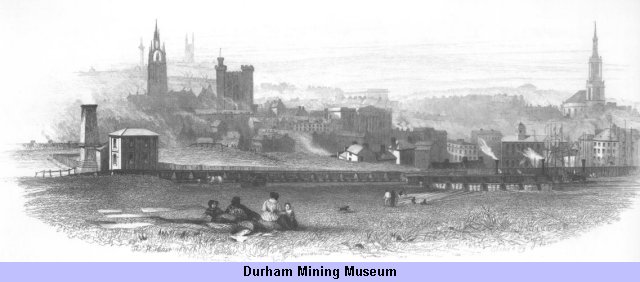
Newcastle On Tyne
 A meeting of the nobility, clergy, and freeholders of the county of Northumberland, was held in the county courts, Newcastle, on August 21, 1824, at which the respective merits of a railway and a ship canal, to be formed between Newcastle and Carlisle, were discussed, and a committee was appointed. On the 26th of March following, another meeting was held, when the report of the committee in favour of a railway was unanimously agreed to. The royal assent was given to an act for that purpose on May 22, 1829. Various portions of the line having been formed and partially used, the whole was at length formally opened, from the Redheugh, near Gateshead, to Carlisle, on June 18, 1838; and a branch has since been formed on the north side of the Tyne, by which the trains arrive at Newcastle. Meanwhile, the Brandling Junction Railway was formed, connecting Gateshead with Monkwearmouth, and having a branch to South Shields. A connecting line, from the Newcastle and Carlisle Railway Company's station at Redheugh, to the terminus of the Brandling Junction Railway, on the east side of Gateshead, completes the line between the German Ocean and the Irish Sea. A stationary engine of 60 horse power, represented in our engraving, draws the waggons laden with coals and other merchandise from the west up an inclined plane from Redheugh; and from this engine they are drawn by locomotives along bridges which extend across the principal streets of Gateshead to the Brandling Junction station, near which there is a coal-staith on the Tyne, opposite to Newcastle Quay.01
01 "I pity the man," says Sterne, "who can travel from Dan to Beersheba, and cry, 'Tis all barren !" Scarcely less pitiable is the man, who, travelling for the purpose of writing a tour, can see nothing in Newcastleupon-Tyne worthy of his pen but a few cows coming from the Town Moor to be milked! (See Sir G. Head's Home Tour.) "Few places in the British empire," as has been observed in another place, "possess more or greater claims to the notice of the antiquary, the merchant, or the man of taste. To the first its history and localities present a rich mine of subjects for interesting reflection; the second beholds in it the emporium of the trade of the north of England; and the third may now be gratified by the display of architectural beauty presented in its 'streets of palaces.'" [Return]





 Contains public sector information licensed under the

