


|

|

|

|
|
 |
 |
|||
Plate XI.
The Fool Plough.
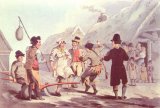
This is the name given to it by Strutt, though it is better known in Yorkshire under the title of Plough Stotts, which may not improbably be derived from the German word stutze, a prop or support. Plough Monday, or the first Monday after Twelfth-day, has been considered as the Ploughman's holiday, and the annexed Plate represents a ludicrous procession on that day, not unlike that of the Mummers, or Morris-dancers, at Christmas. The principal characters in this farce are the conductors of the plough, the plough-driver with a blown bladder at the end of a stick by way of whip. the fiddler, a huge clown in female attire, and the commander in chief, Captain Cauf Tail, dressed out with a cockade and a genuine calf's tail, fantastically crossed with various coloured ribbands. This whimsical hero is also an orator and a dancer, and is ably supported by the manual wit of the plough-driver, who applies the bladder with great and sounding effect to the beads and shoulders of his team.





 Contains public sector information licensed under the

