


| Disasters - Names |

|
Disasters - Names | ||
 |
 |
|||
| Date: | 30th March 1857 |
| Colliery: | Broadfield |
| Company: | Alexander Dunn |
| Cause: | Shaft accident |
| Lives Lost: | 1 |
| Category: |
 |
 |
| Description | |
|
|
No. 12. Occasioned by the breaking of a winding Rope.
I examined this colliery a day previous to the accident, and found one of the winding ropes a good deal worn. It had been cut and a clasp inserted. Before going on the cage to be lowered by it I directed the manager's attention to the unsafe state of clasped ropes. In reply, he informed me they had a new one in store, and would put it on immediately.
The rope broke at the clasp, and the oversman lost his life by it.
In this district the ropes are generally well attended to, but I find a disposition on the part of some owners, when a rope fails, to cut off the worn part and get it clasped, then wear it against a good rope, the men being directed to "ride" upon the new one.
I have always pointed out that this is an objectionable practice. It is safe so far as the underground workmen are concerned, but I have observed that when a rope breaks, the men at the pit-head run perhaps the greatest risk. See accident No. 14.
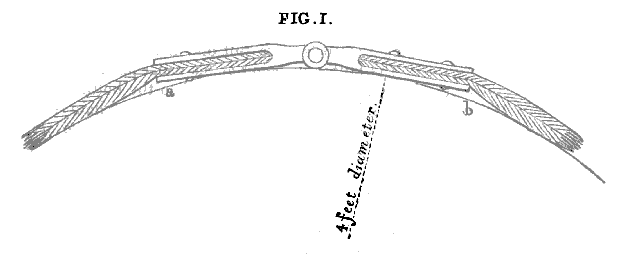
Clasped ropes are unsafe wherever they require to pass over the "pullies" and around the "drums," particularly where pullies or drums of small diameter are used. I believe, however, those who give minute attention to details of cost find that it is not economy, even keeping safety out of view, to use bad or overworn ropes ; and there can be no doubt they do form an unnecessary and preventable source of danger. Fig. 1 will illustrate this. The weak points a b are well known to experienced engineers.
Source: 1857 Mines Inspectors Report, by William Alexander, H.M. Inspector of Mines, Page: 124
|
|
| Fatalities | |
|
|
 | Walker, Alexander, Oversman, Breakage of the winding rope |
All names found | |
Those names marked with |
 Return
 Return to Top



 Contains public sector information licensed under the

