William Temple Barrington Colliery official and inventor.
b. 23/9/1858 at Bedlington, 8th. child and 5th. son of John Temple,
coal miner and Sarah Temple, his wife.
William Temple lived in Bedlington and was a colliery official at Barrington Colliery, Northumberland.
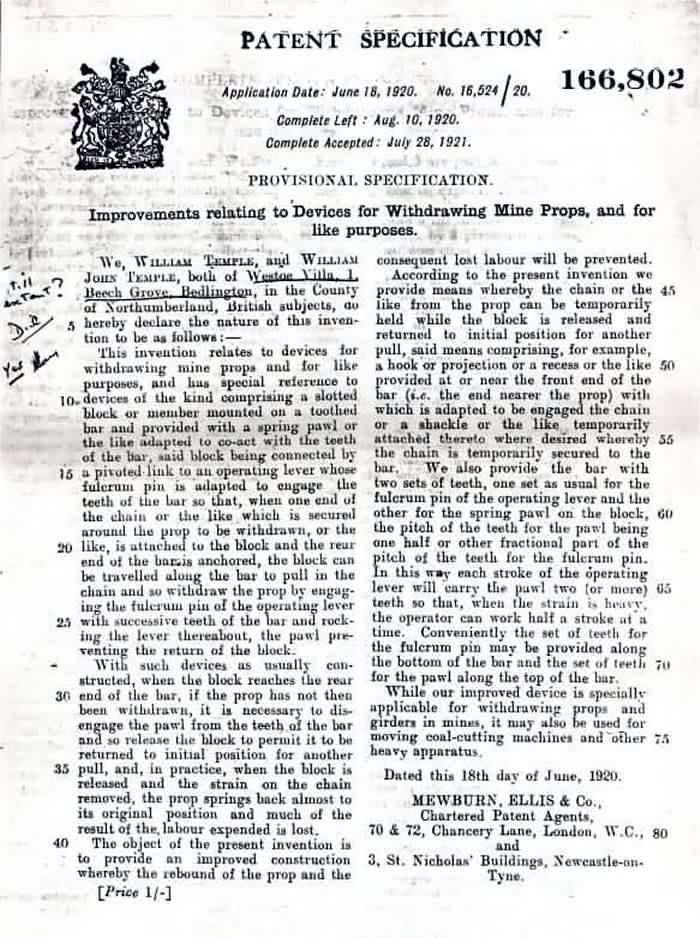
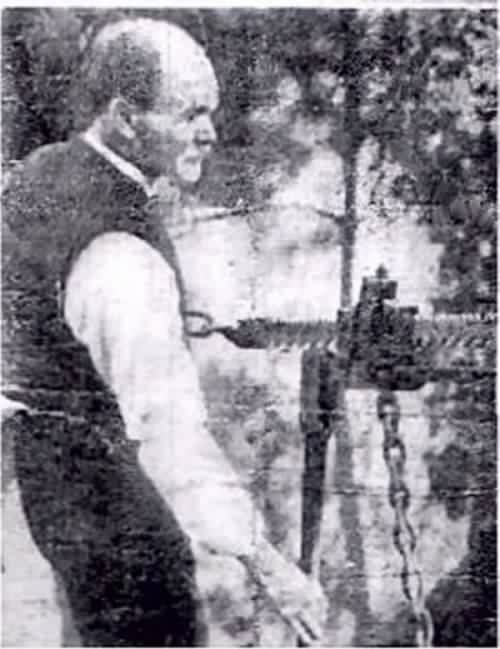
One of his inventions was an improved machine for withdrawing timber from disused working places.
Withdrawing timber from disused workings was described at the time of his invention "as one of the most hazardous occupations in mining".
William Temple's patent.
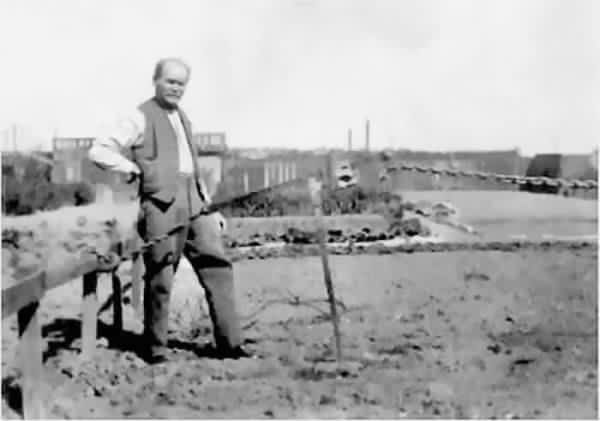
Photo's of William Temple and his invention.
Foot-note.
During the late nineteenth century, Walter Sylvester, from North Staffordshire, invented a ratchet type pulling device, which could be used for withdrawing timber from disused workings. It was patented in 1895 and was known locally as a "Walter".
It became known nationally as a "Sylvester".
Contents
Choppington Colliery.
Information from a rough notebook belonging to William Temple.
1886.
The rent question, result of the voting at Choppington.
For strike..........163
Against.............. 89
Majority.............74
Papers unmarked..............6
For strike.......................163
Against........................... 89
Papers not returned........ 42
Total..............................300
The strike of 1887, Jan 24th.
Form of first ballot paper.
1st. Are you in favour of the Masters terms, that is a 12 1/2% reduction and one shilling per week as rent.
The opposite being strike.
Result at Choppington.
Strike.......................166
Against......................67
Not returned.............12
Total........................245
Form of the second ballot paper.
Will you send a deputation empowered to settle the strike on the best possible terms. The reduction not to exceed 10% at steam coal collieries and not more than 5% at loft coal collieries; owners to pay rent.
The sliding scales to be re-arranged , so as to give back the amount of reduction as soon as possible, when trade improves.
The voting at Choppington.
156.................................for strike
66...................................against
1.....................................spoilt
16...................................not returned
225.................................total.
The above was rejected by the County, by about 4 ½ to 1.
Copy of the third ballot paper.
1st., that the present wage dispute be settled by arbitration and in case the Owners should not agree to this, the wage committee be requested to meet the Owners with full power to settle on the best terms they can obtain.
The County went against this, and several Collieries would not vote.
Choppington voted as follows.
For best settlement.......................................110
Against..........................................................84
Spoilt votes.....................................................3
Not returned..................................................20
Given out.....................................................217
Copy of the fourth ballot paper.
1st., that the wage committee be empowered to meet the Owners and settle on the best terms they can obtain.
2nd., If in favour of continuance of strike, place your cross opposite.
The County went against this and several Collieries did not vote again.
Choppington voted as follows.
Strike..........................................83
For commit...............................121
Not returned...............................14
Given out..................................218
County vote.
For contin..........................3476
Strike.................................4661
1185 majority.
Ballot paper 5th. Time.
1st., to offer 10% , and the Owners to pay 1 shilling per week as rent.
2nd to be left in the hands of the committee.
3rd. no surrender.
The County voted as follows.
For no.1......................................1317
No.2............................................1382
No.3............................................3665
Four big collieries did not vote.
Choppinton voted as follows.
For no.1.................................85
no.2.......................................37
no.3...................................... 63
spoilt......................................4
not returned..........................34
given out.............................223
Ballot paper 6th. Time.
1st., That we suffer no reduction.
2nd., That we offer arbitration.
No. 2 was carried but the Masters would not accept it.
Choppington voted as follows.
For no.1....................................15
For no. 2.................................170
Spoilt.........................................1
Not returned.............................35
Given out................................221
Big meeting at Bedlington to stop the Blacklegs at the Doctor pit, May 9th. 1887.
A lot of people gathered together at Barrington to stop J. Pearson and Davidson from working coals. May 10th. 1887.
Ballot paper 7th. Time, May 20th. 1887.
1st.,Are you willing that the wage committee shall meet the Coal Owners with full power to effect a settlement of the dispute.
2nd., If in favour of continuance of strike, place your cross opposite.
Choppington voted as follows.
For no.1.............................173
For no.2...............................19
Not returned........................28
Total..................................220
The County voted in favour of the committee.
During the strike there was a proxy vote taken twice, the first was on C. Palmers proposal and the second was as to whether we should send the committee, with full power, this lost by a very narrow majority, so the ballot papers were sent out for the 7th. Time.
The County voted as follows.
For contin......................................5602
For strike.......................................1876
The strike against a 13 ¾% reduction.
The Wages Committee met the Owners, as empowered by vote no.7, on May 23rd., but they could not come to terms, so they met the next day and agreed to submit to
12 ½% reduction on Hewers wages, the Owners to pay rent ( at least three or four Companies agreed but they would not make it a County question), some one shilling and sixpence per week, and others one shilling, others not stated but it was expected they would all pay one shilling per week, if they wanted men.
Choppington started to work on May 26th., some Collieries on the 27th., others the following week.
The Choppington men were on strike 17 weeks all but a day, but it may be called a 17 week strike.
Information supplied by Mike Temple, William Temples Grandson.
Contents
|