


| Newspaper Articles |

|
Newspaper Articles |
 |
 |
26th December 1946
Over 60 Years In Mines
Popular Cumberland Official Retiring
Rugby League Footballer And Ambulance PioneerOne of the best known and most popular men in the Cumberland coalfield is to enter into a well-earned retirement at the year end after completing over 60 years' service in the mines.
He is Mr. Tom Banks, the present assistant general manager to the Cumberland Coal Co., Whitehaven.
Born at the Black Cock Inn, Distington, Mr. Banks began his mining career at the early age of 10½ years by working on the screens at Oatlands Colliery. His hours were from 6 a.m. to 4.30 p.m. and his wage was 11½d a shift. That was in 1886. For a mettlesome lad the work was not exciting enough and the pay was too low, and three months later found Tom working down Lowca No. 9 Colliery, "clipping" tubs on to the rope at 1s 11d a shift.
Rapid Promotion
Tom took to pit work as a duck takes to water. He was ambitious and within a few years he had sampled almost every job in the mine. His practical experience was supplemented by reading all the mining books he could lay hands on. Thus his promotion was rapid. He was shaftsman at 17, deputy at 21, overman at 22.
At 24 he got his under-manager's ticket and on the same day was appointed under-manager. That post he held for four years before he was persuaded by a Hatton Garden firm of diamond merchants to join an expedition prospecting for diamonds in Egypt on a site supposed to be that worked by King Pharaoh.
Asked if he ever found diamonds, Mr. Banks made the startling reply "Yes, we sometimes got them by the bucketful-but they happened to be cloudy, not clear, and therefore were not worth much. They were what we called beryls."
After two years in Egypt Mr. Banks returned to his native Cumberland on holiday and was just preparing to relax when an inrush of water occurred at Moresby Colliery fortunately without loss of life. As the under-manager had left, Mr. Banks was pressed to accept the vacancy and tackle the flood. He did so, and two years later, in 1910, was made manager not long after he had successfully sat his manager's examination.
A year later he was appointed manager at Oatlands, but he soon returned to Moresby, this time as agent, a post he held until 1921. On Sir Samuel Kelly taking over St. Helens Colliery, Siddick, Mr. Banks went there as agent and remained until 1933 before joining Messrs. Priestman, of Newcastle, who had taken over the Whitehaven pits. His post was still agent until the advent of the Cumberland Coal Co. when he became assistant general manager.
Awarded King Edward Medal
Altogether Mr. Banks has taken part in rescue operations following eight explosions and was awarded The King Edward Medal in 1910 for his work in Wellington Pit, where he was in charge of sealing off the areas affected by the explosion. In all he spent three months in Wellington Pit before returning to his Moresby post — his directors had agreed to lend him to the Whitehaven Company for that period.
Mr. Banks has sat on one Royal Commission which dealt with safety in mines research; since 1928 he has been chairman of the Cumberland District Miners' Welfare Central Committee; for over 30 years he has been an examiner for Cumberland for deputies undergoing examination, and for a long period he acted as instructor at mining classes held under the further education scheme. That link probably brought him a governorship of the Workington Grammar School, which he has held for a long period.
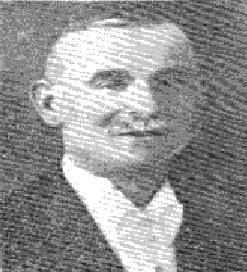
Ambulance work, so vitally interlinked with the mining industry, had in Mr. Banks one of its pioneers in Cumberland. He was the first secretary of classes founded at Lowca, Pica, and Moresby, and for a time was secretary of the county organisation. As long ago as 1920 he was made a Serving Brother of the Order of St. John.
Rugby League Football
But it was not all work and no play with Mr. Banks. In his younger days he was a grand hooker at Rugby and to-day he is chairman of the Cumberland Rugby League and vice-chairman of the R.L. Commissioners.
The two clubs for whom Mr. Banks played were Parton and Workington, both outstanding junior clubs at the time. For instance, Mr. Banks hooked for Workington when they met Wakefield Trinity in the R.L. Cup at Workington and created a great surprise in drawing 3-3. That surprise would have been transformed into a bombshell had not Workington unaccountably missed converting their try, which was scored under the posts. Wakefield won the replay at Wakefield fairly easily.
Hunslet £110 Offer
Mr. Banks recalls other thrilling R.L. Cup battles while playing for Parton, then an unknown club. In the first round proper they were drawn against Millom, then a First Division club, at Millom. In the next round the winners were drawn at home against Hunslet, who, sure that Millom would be their opponents, offered the South Cumberland Club £110 to transfer the fixture to Hunslet. But Parton sprang a surprise by winning at Millom, whereupon Hunslet had to make their £110 offer to Parton. After a good deal of consideration Parton accepted the offer and then put up a magnificent fight at Hunslet before being beaten by 14-9.
Mr. Banks played for the Cumberland county team in 1904 — 5. In the same team were W. Little (Parton), Tom Fletcher (Seaton), "Dandy" Flynn (Whitehaven), and Eagers, a grand wingman. Mr. Banks had several offers from big professional clubs and played three trials for Bradford Northern, but all offers had to be rejected because they would have interrupted his mining career.
Asked about the Cumberland miners, Mr. Banks remarked "On the whole they're a grand lot, but you have to know them intimately before you get the best out of them. For instance, you can't drive them, but you can lead them."
Newspaper transcript kindly provided by
West Cumbria Mines Research.
 |
 |
| Names mentioned in this article | |
 |
 |
| Name | Age | Occupation | Notes |
|---|---|---|---|
| Banks, Thomas | Manager | Whos Who Page | |
| Eagers, — | R.L. Player | ||
| Fletcher, Thomas | R.L. Player | ||
| Flynn, Dandy | R.L. Player | ||
| Kelly, Samuel, Sir | Mine Owner | ||
| Little, W. | R.L. Player | ||
| Priestman, — | Mine Owner |
|
|
| Links to Collieries/Mines mentioned in this article | |
|
|
 | Oatlands Colliery |




 Contains public sector information licensed under the

