


| Newspaper Articles |

|
Newspaper Articles |
 |
 |
26th July 1941, Page: 23, Column: 1
Successful Competitor
As announced in a recent issue first place in the First Class stage of the Prize Competition of Volume 51 was secured by Mr. William Thompson of Seaton Burn, who won the Second Class competition in Volume 50 and, it may be recalled, was placed first in the Firemen stage in Volume 40. An all-round pit experience and the need to get on with the various jobs that came his way represent in large measure Mr. Thompson's training, but as indicated in the statement of his career, submitted upon the usual request being made, he devoted himself to the study of mining subjects at the Evening School ; also, as We understand, attending Saturday and summer evening courses, in addition to securing instruction by correspondence. His fellow-competitors will be interested in the appended particulars and we feel sure join in wishing him every success in his recent appointment.
"I am delighted to learn that I have gained the premier position in the First Class or Colliery Manager's stage of your valuable journal, but I have a feeling of regret that I can take no further part in the competition. It has been to me an education in itself, and I know that many others have found it invaluable. Although the practice I have gained in the competition has taught me to write answers to mining questions, etc., I am afraid that your request for a statement of my career means tackling the most difficult job I have had for some time ; however, I will do my best to comply.
"Like many others, I have had to work hard and earn my own living while studying. I was born at Old Trimdon Foundry, County Durham, on the 24th day of June, 1904. My father was a coal hewer at the Trimdon Grange Colliery. The family removed to Brandon Colliery four years later and my education started there in the council school. Another move was made in 1913, this time to Langley Moor. My school days ended in 1917, and my first work was on the screening plant on the surface at Littleburn Colliery. At the age of 14 I was allowed to go underground to the shaft bottom, where I gained 'pit sense' and experience in and about the shaft. Later I was taken inbye to pony drive and then to other haulage work. Here I gained valuable experience in main and tail rope haulage and the capping and splicing of ropes. The haulage was long and heavy, driven by a 440 horse-power motor, and had numerous districts to run to. I worked considerable overtime at the week-ends with the ropemen and wagonwaymen, learning ropework and way laying. The colliery engineer notified me every time the cage rope was to be re-capped or changed and I was always present and fully instructed. He also taught me all he could about the surface plant, winders, boilers, washeries and screens, etc. Experience was also gained in hand putting and coal hewing. The manager, Mr. J. A. Allison, gave me every opportunity to gain an all-round pit experience. I was sent with the best of the stonemen and learned caunch work, spiling, redding bord rooms, making overcasts, engine rooms and other special work, being also allowed to take dust samples, measure the ventilation, put driving lines on, and go with the surveyor during the quarterly surveys.
"At the age of 26 I started deputy work, but twelve months later Littleburn closed down and had to be dismantled. Fortunately I was engaged as one of the dismantling gang, numbering 14, namely, 3 wagonwaymen, 10 officials and myself. The dismantling finished, work was obtained at Fishburn Colliery, taking bottom caunches in an arcwall district, and I soon became interested in machine mining. At this colliery I worked as a stoneman, conveyor mover, coal-cutter and deputy, and later master shifter over three double unit conveyor districts, one arcwall district, and a pair of drifts. This is an up-to-date machine pit with an output of over 2,000 tons per day. Experience was gained in endless haulage, all different classes of stonework, drifting and putting a staple upwards, conveyors of various types, coal-cutters, longwall, arcwall and punching machines, mechanical picks, compressed air and electric drilling, arch girders, mine drainage, and gassy seams.
"In March, 1938, I was appointed fore-overman at Kimblesworth Colliery, also in County Durham. Here the method of work was chiefly gateway longwall, cut by machines, and hand hewing in bord and pillar workings. My next post was an assistant under-managership at Seaton Burn Colliery, Northumberland, and in May of this year I was transferred to Dinnington Colliery under the same company to fill the position of under-manager, which I now hold.
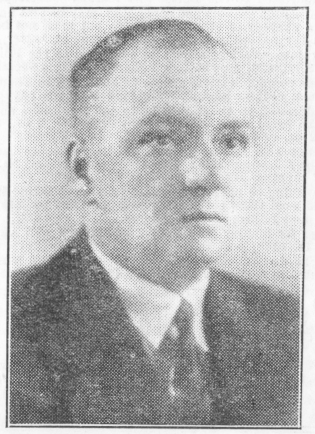
"When about 20 years of age I began to regard mining seriously as a career, attending the evening classes at Johnson's School in Durham. During the first year the subjects included practical mathematics, practical drawing, hand sketching, and geometry and English; second year, mining science, mensuration and drawing ; third year, mining science, mine surveying, trigonometry and algebra; fourth, fifth and sixth years, colliery engineering, mining law and surveying. I hold certificates for passing all subjects.
"After easing off with my studies for a considerable time, I began to realise the value of having the second class certificate, so I turned all my energy and time in that direction, and in 1937 obtained the certificate.
"I have had five years' service with the St. John Ambulance Brigade in the Brandon division, and also four and a half years' practice with the Durham and Northumberland Collieries' Fire and Rescue Brigade as a member of a colliery team.
"In passing out of the Prize Competition I wish this journal every success and a prosperous future ; also my fellow-competitors, who I hope will derive as much benefit as I have done. To Mr. G. A. Hawes, C.C.M., M.E., Honours Medallist in Mining, lecturer at Johnson School, and Mr. J. Hindmarsh, the lecturer in surveying, I tender my acknowledgment and appreciation for the special attention they gave at all times throughout my studies. To the agents and managers and other officials and teachers who have helped me in my career up to this stage, I say 'Thank you.'".
 |
 |
| Names mentioned in this article | |
 |
 |
| Name | Age | Occupation | Notes |
|---|---|---|---|
| Allison, John Henry | Colliery Manager | Whos Who Page | |
| Hawes, G. A. | Lecturer | ||
| Hindmarsh, J. | Lecturer | ||
| Thompson, William | Under Manager | Whos Who Page |
|
|
| Links to Collieries/Mines mentioned in this article | |
|
|
 | Brandon Colliery |
| | Dinnington Colliery |
| | Fishburn Colliery |
| | Kimblesworth Colliery |
| | Little Burn Colliery |
| | Seaton Burn Colliery |
| | Trimdon Grange Colliery |




 Contains public sector information licensed under the

