


| Newspaper Articles |

|
Newspaper Articles |
 |
 |
30th December 1939, Page: 195, Column: 1
Explosibility Of Coal Dusts
There has been co-operation between the U.S. Bureau of Mines and the S.M.R.B. of this country since the year 1924, and a comparison of test methods was prepared for consideration at the 5th International Conference of Directors of Mines Safety Research which it was proposed to hold in the States. This paper on "Notes on Large-scale Tests of the Explosibility of Coal Dusts made in the United States and Great Britain," by H. P. Greenwald, supervising engineer of the experimental coal mine section, has been issued in Report of Investigations 3462. Regarding the effect of inflammable gas in the air-current Mr. Greenwald says :—
Tests to determine the increase in explosibiity of coal dusts
caused by small percentages of inflammable gas (firedamp) in the
air-current have been made with nearly all the different coals
received at the Experimental coal mine. From the results was
deduced the relationship 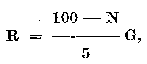 , where R is the percentage
of additional inert material required in a mixture of any
coal to offset any given per cent. of gas in the air-current, N is
the percentage of inert dust required in a mixture of the same
coal to prevent propagation when no gas is present, and G is the
percentage of gas in the air-current. No noteworthy exceptions
to this rule were found in the large number of tests made.
Mason and Wheeler, reporting in S.M.R.B. Paper 64 on similar tests, arrived at the same expression except that the denominator of the fraction was 6 instead of 5. Natural gas was used in the tests at both stations. That used in the American tests carried a larger proportion of the higher homologues of the methane series and less nitrogen than did the British gas, but the proportion of methane was nearly the same in both gases. It is true, also, that the British tests were carried out more precisely and in more detail than the American tests. Taking these facts into consideration, it is concluded that both testing stations have arrived at essentially the same conclusion regarding the effect of firedamp in the air on the explosibility of coal dust.
 |
 |
| Names mentioned in this article | |
 |
 |
| Name | Age | Occupation | Notes |
|---|---|---|---|
| Greenwald, H. P. | |||
| Mason, — | |||
| Wheeler, Richard Vernon | Whos Who Page |




 Contains public sector information licensed under the

