


| Newspaper Articles |

|
Newspaper Articles |
 |
 |
17th December 1938, Page: 182, Column: 1
Mining Lecturer Retires
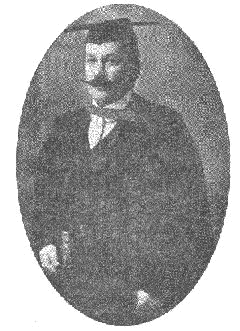
36 Years in Lanarkshire.
The sons of the county of Durham are to be found in most of the coalfields, not only at home but abroad. The county is important, if not from the acreage point of view at least as a mining centre, and it is but natural that many of her young men of ambition should look further afield.
One of those who decided to make a trek in the early days of the twentieth century was Henry C. Harris, who crossed the border. After thirty-six years' service in Scotland as a mining lecturer, and having reached the age of retirement he has returned to his "native parts." His name will be a familiar one to a great many readers of THE SCIENCE AND ART OF MINING. For a period he contributed to the pages of this journal, and selections of his writings in due course were included in THE COLLIERY MANAGER'S GUIDE. The demand for this book was sustained and thousands of copies were disposed of to students whose aim was to raise their status in the mining world. To keep more in touch with the rapid developments of modern days considerable revision of the text became necessary, and rearrangements culminated in the production of THE COLLIERY MANAGER'S NEW GUIDE. Mr. Harris has also written books on Motive Power Engineering and Mining Drawing.
Returns to Native Area.
Though he devoted most of his life to work as an educationist north of the Tweed, Mr. Harris retained a natural affection for Sunderland and the surrounding area. It would not be an impossible suggestion that he is not a little proud of his nativity. At any rate colour is lent to the idea seeing that he has returned to the Wearside in his retirement. His friends will join in hoping. that he may be spared many happy years.
Sunderland, it may be permissible to recall, was the "birth-place" of THE SCIENCE AND ART OF MINING, and we understand Mr. Harris can remember quite well the sturdy figure of Mr. William Tate, the founder of the journal. For many years Tate was a mining lecturer in the district. He trained in a scientific way many of Mr. Harris's old mining friends who resided in the north-east area, and they in turn considerably helped the subject of this sketch in a practical way during his period of training.
Early Apprenticeship Days.
Mr. Harris started his apprenticeship as a mining engineer with the Londonderry Collieries, Ltd. His first location was Silksworth Colliery, Sunderland. That was in 1893, and whilst there he was instructed in matters appertaining to practical mining by the late Frederick S. Panton, whose knowledge of the subject placed him in the foreground as an expert. During the following eight years Mr. Harris studied mining and allied subjects at Silksworth and at Armstrong and Rutherford Colleges, Newcastle-on-Tyne. In the meantime he occupied positions at the Colliery as surveyor, overman, and assistant manager.
The results of the effectiveness of his training were seen in 1901, when he obtained his Colliery Manager's Certificate at Leeds, and also the King's Medal for Honours Part II. in Mining under the Board of Education, South Kensington, being bracketed for the second position in the list for Great Britain. About this time he acquired his first experience as a teacher, conducting a special class in mining for one year at Consett in his native county.
The teaching profession has always had a strong fascination for many young men. Having realised the importance of education they feel impelled to share with others some of the things they themselves have learnt. Feeling the urge they decide to adopt teaching as their life's work. It was so with Mr. Harris, emphasised it may be by the year's experience gained at Consett. It was perhaps but a natural sequence that shortly afterwards he applied for the post and was appointed Chief Mining Lecturer under the Lanark County Council in Scotland at Coatbridge Mining College and other centres. The permanence made of the position will readily be appreciated when it is recalled that his retirement on pension took place only two months ago.
As already stated Mr. Harris secured his parchment as a colliery manager in 1901. It is known that the authority of a mining lecturer is more definitely assured by possession of the parchment, but unwilling to rest on honours so far attained Mr. Harris decided to secure his papers as a surveyor. Thus in the year 1907 he qualified for the First Class Honours Certificate in Surveying of the City and Guilds of London, following this up three years later by obtaining the B.Sc. in Mining Engineering of the University of Glasgow.
Served in Great War.
Like many others Mr. Harris served with the British Army in the Great War. In 1916 and on to 1919 he forsook the teacher's rostrum for the Royal Engineers, the centre of his activities as an Army man being "somewhere in France." With this one break he has trained students to become managers, under-managers and surveyors, over a period of nearly four decades. All who follow the profession of the lecturer aver that as students vary greatly from year to year, there come times when it is not an easy task imparting technical (and other) knowledge to classes of young persons, but Mr. Harris does not hesitate to say the work has at all times been a pleasure. It is a sphere of usefulness in which many friendships are formed, the student of to-day becomes the official of to-morrow, and so on. In this way Mr. Harris has also acquired a wide acquaintance, and many old students unreservedly acknowledge how much they owe to the guiding hand in the classroom. The attachment between the man who heeds that guiding hand and "his old teacher" becomes more real with the passing of the years. Those who find themselves happily "fixed up" at or near home do not forget; those who find it necessary to go further afield also remember. The teaching profession may have its drawbacks but it has its compensations.
At a meeting of the Scottish Branch of the National Association of Colliery Managers, held in the Royal Technical College, Glasgow, on Saturday, 12th November last, Mr. Harris, who is a member of the Council of the branch, was presented with a wallet of Treasury Notes by his former pupils and friends of the Scottish branch. The presentation was made by Mr. W. H. Napier, general manager of the collieries owned by the Glasgow Iron and Steel Co.
To-day's Education Problem.
It is a common saying that there are two sides to every question. The remark certainly applies to education. Conferences attended by educationists have revealed that there is not always agreement as to either the method or curriculum, and their discussions are always interesting as they lead to the wider adoption of improvements, however slow the process may be. The view arrived at by Mr. Harris, though he was slow to express a definite opinion, seems to he that there is nothing to equal the instruction given by properly qualified and full-time mining experts at part-time day classes conducted at properly equipped centres, of which there has been a considerable growth in recent years. The co-operation of Mining Companies and of the Miners' Welfare Committee in this movement is gradually increasing, and he feels that at some time in the near future mining students should be provided for in the same generous way as students attending secondary schools for higher education.
Mr. Harris is not satisfied that instruction given in Mining end Allied Subjects at evening classes, carried out mostly by part-time teachers who are also engaged in the mining industry, is sufficient at the present day to cover the necessary technical training required for the preparation for the Colliery Manager's and Under-manager's Certificates, and for the training of men required for important positions in the industry.
He considers that as a general rule mining students who work during the day and have only a limited time for study and classes afterwards, are handicapped in two important branches of training. They do not always find out what is going on in other collieries and in other districts apart from, it may be, their own particular colliery. In this way much valuable observation experience is overlooked, and in consequence they fail to acquire the proper understanding of modern methods of working and modern machinery used in mines. Mr. Harris advocates students' connection with Institutions or Mining Societies by which up-to-date literature dealing with research work in Mining and visits of inspection to collieries are made possible. All mining plant and appliances together with mining methods should be studied in a practical and detailed way, independent of any work undertaken at the mining school.
The regular reading of journals dealing with mining matters should not he neglected by any student of mining as, in this way, a wide range of mining operations might he studied and also a suitable method of dealing with possible examination questions may be obtained.
 |
 |
| Names mentioned in this article | |
 |
 |
| Name | Age | Occupation | Notes |
|---|---|---|---|
| Harris, Henry C. | |||
| Napier, W. H. | |||
| Panton, Frederick S. | Whos Who Page | ||
| Tate, William |
|
|
| Links to Collieries/Mines mentioned in this article | |
|
|
 | Silksworth Colliery |




 Contains public sector information licensed under the

