


| Newspaper Articles |

|
Newspaper Articles |
 |
 |
28th March 1936, Page: 294, Column: 1
Career Of Mining Lecturer
Began as Ordinary Miner.
Retiring at the end of January, as already announced in this journal, Mr. Daniel Davies, who has been the senior mining lecturer for Glamorgan since 1912, has had experience as a colliery manager, mine surveyor, and trained mines rescue man.
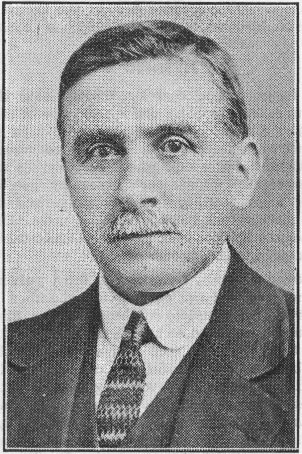
In the early days of his working career, Mr. Davies was attracted by the higher wages, and gave up his skilled craft of blacksmith to enter the mine. Starting as a miner he later became an efficient timberman, and also gained experience with gob-fires, unwatering old workings, setting out and driving stone drifts, besides acquiring first-hand knowledge in the mechanical engineering of collieries.
The job to which Mr. Davies has been most devoted, however, and one covering a period of three and a half decades, has been that of teaching mining and engineering to the young students as one generation followed another, younger brothers coming along after their elders, and sons succeeding their fathers. The mining men occupying official positions to-day in the South Wales coalfield, and in other mining areas at home and abroad, who have come under the influence of Mr. Davies as an instructor, must represent a very large family indeed.
Contributor to This Journal.
He was a student himself in the days when his name began to figure in the pages of THE SCIENCE AND ART OF MINING. That was in the late nineties, and for a period during 1897-98 he had accepted answers in the Prize Competition feature of this journal, which was then under the Editorial control of C. M. Percy, M.E., F.G.S. Ten years afterwards, that is in 1907, Mr. Davies joined the contributing staff of this journal under the pen name "Brychan," a connection which was sustained until 1921 when, in view of the pressing claims upon his time and energies, he decided to confine his working day to his duties as a lecturer, thus affording more opportunity to indulge in social and recreational pursuits.
One of his contributions to this journal was on "The Prevention of Accidents from Falls of Roof and Side," and in view of its practical application Sir Francis Brain, then President of the National Association of Colliery Managers, ordered the Paper to be reprinted and circulated among the members for discussion at the branch meetings of the Association. Other writings were collected and rearranged in book form and published under the titles "Problems in Land and Mine Surveying" and "Safety First in Mining." Both books were favourably noticed and well received by mining students and officials.
Results of Hard Work.
In 1899 Mr. Davies was in possession of his first and second class certificates of competency under the Coal Mines Regulation Act, and when the examination results were published he had the felicity of finding himself in the list of Board of Education winners, securing Part I. Honours in Mining. In the winter session of 1899-1900 be acquired his first experiences as a teacher, and where most men would experiment with but one class he began by conducting classes at three centres in elementary mining. Also about this time he carried off the premier prize of Gold Medal offered by MINING ENGINEERING. He secured a post as a colliery manager in 1900, but as teaching had its appeal for him he added part-time teaching to the task of controlling the operations of the mine, and during the ensuing four years he was conducting mining classes at four different centres.
All this meant hard work, however much the pleasure that may attend the performance of an agreeable task. At the same time, though perhaps not perceived in that light, it was a probationary period, preparing him for the more arduous lecturing duties that lay ahead. Meanwhile Mr. Davies was one of the number who took an important part in the work of exploration involved following the explosion at the Universal Colliery in May, 1901. Colliery management also presented some difficulties, in particular that of unwatering some eighty acres of old workings. It was, however, successfully accomplished, and Mr. Davies earned special praise for this work from the district Mines Inspectors of that day, namely, Messrs. F. A. Gray and J. Dyer Lewis. Incidentally, it may be mentioned that in 1903 Mr. Davies acquired his Honours Certificate Part II. First Class under the Board of Education, his success on this occasion carrying with it the Bronze Medal. It may also be recorded here that in 1907 he was awarded the Lewis First Prize of £20 by the South Wales Institute of Engineers.
Glamorgan Mining Instruction Developments.
The year 1904 saw Mr. Davies enter upon what was definitely to become his life work. Beth officials and workmen at the colliery united to give him a most handsome send off upon his deciding to become a Mining Lecturer under the Glamorgan Education Authority, the mining staff of which then consisted of an organiser and three lecturers. Almost immediately a four years' course of mining instruction was drawn up, whilst home and foreign tour scholarships were officially established in 1905, in addition to the opening of the first Summer Mining and Engineering School, the duration of this "school" period being three weeks.
Another lecturer was added to the staff in 1900 to meet the growing needs for instruction, followed by another in 1908, and in 1910 day classes were established for the benefit of workmen who were on duty on the night shift. Then 1911 was signalised by the erection and equipment of five mining laboratories in the county being decided upon, and the Glamorgan Education Authority being appointed an approved authority to examine for, and grant, Firemen's Certificates under the Coal Mines Act. About this time the staff consisted of a Director and nine lecturers, who conducted ninety mining classes in the county, there being 2,600 students enrolled, irrespective of firemen's classes.
As the years passed the work under the Glamorgan Education Authority grew apace. Decentralised classes in Surveying, — a ten weeks' course in May-July, — were established in 1916 as a temporary measure and made permanent. A year later lecturers were appointed in Physics and Chemistry of Mining, and in 1920 the whole mining scheme was recast and the period of study extended to five years. By the year 1924, as indicating the speed of development, there were nineteen lecturers in Mining and Physics and Chemistry of Mining permanently engaged under the Education Authority, the Treforest School of Mines was taken over in 1928, and in 1933 the fifth and last of the Senior Mining and Technical Institutes for the county was completed, the five centres being at Caerphilly, Bridgend, Bargoed, Neath and Pontardawe.
In successive years Mr. Davies conducted tours in home coalfields. That was in the period 1905-1920, and in four of the five years 1906-1910 he visited continental coalfields on tour, but not in the capacity of conductor. In this way he acquired much valuable information of practices and customs outside his own South Wales area, the benefit of which would be passed on to the students attending his classes. He made his first unofficial visit to the Ruhr Valley in 1913, conducting a party of engineers through the coalfield, and it was in October of that year that he rendered service as a member of the rescue brigade on the occasion of the disastrous Senghenydd Colliery explosion, in which 439 lives were lost. In 1929 he attended, by invitation, and gave evidence before, the Departmental Committee of Enquiry on Mining Education and the Qualifications of Colliery Officials.
A Word in Season.
In view of the extensive experience gained by Mr. Davies as a long-standing lecturer it occurred to us that a few words of advice to students would he appropriate, especially in these days when in common with so many other industries mining has suffered in the world-wide depression. Mr. Davies hesitated to offer any advice which, human nature being what it is, so frequently passes unheeded, youth insisting on acquiring its knowledge and experience at first hand, even though the process may be prolonged and painful. Naturally no one would wish to see too old a head on young shoulders ! Nevertheless, a word in season may be an inspiration to the youth who aspires to get out of the common groove, and the inquiries of Committees and Commissions appear to suggest possibilities in regard to the future which the far-seeing student may feel he cannot afford to entirely disregard. Present and prospective students may therefore contemplate with some interest the views of Mr. Davies as expressed by him in the appended notes
"The number of students coming forward is not nearly commensurate with the increased facilities now being provided for instruction in mining technology. University and technical college authorities have noticed with dismay this reluctance to adopt the mining profession, and in some cases have arranged with large firms to provide more worth-while scholarships than ever before.
"It is a sound maxim that 'The best way to secure promotion is to be prepared for it.' It is conceivable that all colliery agents will be required in course of time to hold first class certificates that colliery overmen will be unable to hold office unless they possess parchment approaching the equivalent of the present second class certificate; and that a more thorough and comprehensive examination in practical mining matters will be required for the fireman's certificate than is now the case. Safety courses for boys are being set up in all the coalfields, and ample inducements to attend are, and will be, forthcoming. An increase in the mines inspectorate is not outside the bounds of possibility, and the appointment of permanent inspectors under Section 16 will meet with more general favour.
"A rekindling of the enthusiasm for mining I once knew seems inevitable, and students cannot do better than prepare for the plums that will come their way, as very properly they should do. It is too much to expect one to be his own taskmaster; few of us have sufficient will-power to succeed in that respect. Some other should set the questions and the student should be satisfied with answering them. There is no better method of acquiring this ability than the competitive system which is, and always has been, a feature of THE SCIENCE AND ART OF MINING. The man can measure his ability alongside of, and against, his fellow competitors. Furthermore, constant practice in preparing written answers ensures a facility of expression and enables him to put his thoughts, his ideas and his knowledge into writing in a style and diction which cannot fall to please the examiner. The importance of this is clear when it is realised that candidates for the Board of Trade Certificates, before they are allowed to face the judges, are judged by the written work submitted, which must be of the requisite standard before they can take the oral part of the examination.
"And lastly, if the competition is keen, and in this journal it usually is, a friendly rivalry is engendered, and a vast amount of reading and research is essential if one is to excel. In this way the student becomes a storehouse of useful knowledge from which he can draw as occasion demands."
 |
 |
| Names mentioned in this article | |
 |
 |
| Name | Age | Occupation | Notes |
|---|---|---|---|
| Brain, Francis, Sir | |||
| Davies, Daniel | |||
| Gray, Frederick Augustus | H.M. Inspector of Mines | Whos Who Page | |
| Lewis, John Dyer | H.M. Inspector of Mines | Whos Who Page | |
| Percy, C. M. |




 Contains public sector information licensed under the

