


| Newspaper Articles |

|
Newspaper Articles |
 |
 |
10th August 1929, Page: 25, Column: 1
Lancashire Mines Inspector Retires
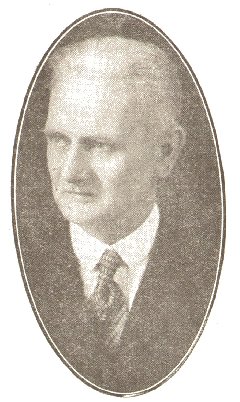
Mr. A. D. Nicholson, I.S.O.
Inception of Mines Inspection.
Eighty years have passed since the first real Mines Inspection Act was agreed to and became the law of the land. In those days prejudice against Government intervention in the working of industrial concerns was much more real and pronounced than it is to-day, and it is recorded that in the discussion of the proposed innovation a north-country colliery owner made the statement that he would say to any inspector coming to his collieries, "You may go down the pit how you can, and when you are down you may remain there."
That a majority was secured favouring the appointment of inspectors may be safely attributed to the comparatively smooth working of Lord Ashley's Act of 1842, restricting the labour of boys, prohibiting the employment of women below ground, and containing what in effect was no more than a pious expression of opinion regarding inspection. The passing of the Act of 1849 resulted in the appointment in November of the following year of Matthias Dunn, Joseph Dickinson, Charles Morton and Kenyon Blackwell for the purpose of inspecting the mines of the country. They were a noble band of four, and though their powers were restricted when compared with modern times they so performed their duties that prejudice against them faded away like smoke before the wind. Of perhaps equal importance is the fact that their appointment established the principle of underground inspection. At the present day there is a chief inspector, a deputy inspector, an electrical inspector, a medical inspector of mines; together with Divisional inspectors in charge, senior inspectors, junior inspectors, sub-inspectors, and inspectors of horses in mines, numbering in all more than one hundred.
Friendly Visitors.
In 1897 the late C. M. Percy said: "No sensible citizen in these days, whether he be colliery proprietor, or manager, or miner, or neither, questions the enormous benefit of the free and constant access to the mines of talented experts, whose only office is that of safety . . . there is no prejudice against these men now; they are friendly with the proprietors and managers, to whom they are really of great service, and to the miners they are protecting angels. They do not hamper work; they do not dictate to or harass the manager. If the law is obeyed, they are simply friendly visitors ; if the law is not obeyed, they are officers of justice." With that statement there will be perfect agreement. Throughout the coal producing countries of the world Great Britain is envied her Mines Inspectorate, constituting as it does a most useful and capable body of men who use their powers and work discreetly for the benefit of the whole industry and not merely a part of it. Mr. Percy was equally sound when he attributed the "great success in lessening danger and increasing efficiency to the high character, eminent talent, and never-failing tact of the mine inspectors." As regards the danger it will be sufficient to say that half a century ago the death-rate from accidents per million tons of mineral raised was 7.42; last year the rate was 4.04. Expressed in another way, the death-rate per thousand persons employed has been reduced from 2.24 to 1.04.
These reflections were inspired by the announcement that Mr. A. D. Nicholson, Inspector in Charge of the Lancashire and North Wales Division, was retiring from the Public Service, his retirement dating from the 24th of July. Those who know him best will recognise in the preceding paragraph an appreciation applicable to Mr. Nicholson, who conducts the business he may have on hand in a quiet unassuming manner. With thirty-two years behind him as an inspector of mines his reminiscences would be of more than passing interest, but even when they abandon the activities of their career the mines inspectors seem to retain as an acquired habit the discretion exhibited during their long period of service.
Schooldays and Apprenticeship.
Arthur Darling Nicholson is a Dunelmain by birth, and first saw the light of day in the cathedral city of Durham. His childhood days were not dissimilar to those of others. Attaining the age of ten, he had the good fortune to be admitted to Bedford County School, where he remained for six years, acquiring much helpful and useful knowledge in this educational establishment, the reputation of which was not merely local, but attracted residents from districts far and near. In 1880 school-days were ended, and the serious business of life entered upon by way of apprenticeship as a mining engineer to Mr. Fenwick Darling, serving his time at Eldon and South Durham Collieries in the Bishop Auckland district, where coal mining and iron manufacture and agricultural operations predominate. The class-room was not despised with the approach towards the state of manhood, and during the sessions 1883-1886 Arthur continued his studies at Durham University College. His achievements included the entrance Exhibition and Scholarships and the Freire Marreco Medal and prize for chemistry; also the degree of Associateship in Science with First Class Honours in Geology. In July, 1887, he secured his parchment as a colliery manager, and continued at South Durham Collieries in various capacities until March, 1901, when he was appointed undermanager at Elemore and later the Eppleton Collieries, belonging to the Hetton Coal Co., Ltd.
Appointment to Inspectorate.
In 1897, at the age of 33, Mr. Nicholson was successful in obtaining First Class Honours in Mining and the Bronze Medal, and in September of that year in competitive examination, he secured a post as an assistant inspector of mines. He was favoured in what might be termed his apprenticeship to the inspectorate in the sense that he served under two chiefs whose reputation was national. He was first stationed at Carlisle under the late Mr. John Laidler Hedley (a Wigan-born man whose grandfather migrated from Earsdon in Northumberland), and afterwards transferred to Newcastle under Mr. John Boland Atkinson, who, with his brother, William Nicholas, made most useful contributions to the problem of Explosions in Coal Mines, culminating in a book bearing this title and which even to-day many regard as a classic.
A senior vacancy arising in 1910, in June of that year Mr. Nicholson received the appointment, and succeeded the late Mr. R. Donald Bain as Inspector in Charge of the Durham District. Three years later he was transferred to Liverpool, and finally appointed Divisional Inspector of the Lancashire, North Wales and Ireland Division in December, 1914. In June, 1926, His Majesty conferred upon him the Imperial Service Order. That Mr. Nicholson may long live to enjoy the pleasures of a life free from active service will be the fervent wish of his friends and the mining community in general.
 |
 |
| Names mentioned in this article | |
 |
 |
| Name | Age | Occupation | Notes |
|---|---|---|---|
| Ashley, Lord | |||
| Atkinson, John Boland | H.M. Inspector of Mines | Whos Who Page | |
| Atkinson, William Nicholas | H.M. Inspector of Mines | Whos Who Page | |
| Bain, Richard Donald | H.M. Inspector of Mines | Whos Who Page | |
| Blackwell, John Kenyon | H.M. Inspector of Mines | Whos Who Page | |
| Darling, Fenwick | H.M. Inspector of Mines | Whos Who Page | |
| Dickinson, Joseph | H.M. Inspector of Mines | Whos Who Page | |
| Dunn, Matthias | H.M. Inspector of Mines | Whos Who Page | |
| Hedley, John Laidler | H.M. Inspector of Mines | Whos Who Page | |
| Morton, Charles | H.M. Inspector of Mines | Whos Who Page | |
| Nicholson, Arthur Darling | H.M. Divisional Inspector of Mines | Whos Who Page | |
| Percy, C. M. |
|
|
| Links to Collieries/Mines mentioned in this article | |
|
|
 | Eldon Colliery |
| | Elemore Colliery |
| | Eppleton Colliery |




 Contains public sector information licensed under the

