


| Newspaper Articles |

|
Newspaper Articles |
 |
 |
24th September 1927, Page: 69, Column: 1
Some American Notes
Fishing for Coal.
There is better coal in the rivers of Pennsylvania, a contemporary asserts, than is produced from the mines there, and the colliery companies are busily engaged "fishing" for it. The strange feature about it is that years ago the coal was dumped in the rivers by the collieries as being useless. Most of the rivers have strong currents. They carried the "reject" coal down stream, and after 50 or 60 miles of washing on the river bed, the bad coal was found to be of better quality than the good coal straight from the mines. More than thirty years ago the collieries tried the dumps of coal in the river, but found the coal was not worth the expense of raising it, and so it was left. But during the 30 years, the water has been doing the coal good, and more recently, when the coal was raised "as an experiment," it was found to contain less ash, and to yield more thermal units per ton than the collieries' output. So now pumping and dredging the coal in the rivers is a busy and highly profitable industry.
Electricity in Coal Mines.
Electric locomotives, electric lights and electric motors are rapidly replacing the mine mule and the miner's lamp in the coal mines of the United States, according to a survey just made public by the U.S. Bureau of Mines. Of the total output of bituminous coal 88 per cent. now comes from mines using underground locomotives, and 1,512 mines are using locomotives exclusively. Of all the mine locomotives in service, 98 per cent. are electric. At present only 37,000 animals are at work in coal mines, while there are in use 14,723 locomotives of all types. Of these, 14,280 are electric. It is estimated that more than a quarter million electric miners' lamps are now in use. In addition to electric locomotives and lamps, electric ventilating systems and coal-hoists are being installed, while there has recently been completed in a Pennsylvania mine an electric belt-conveyor which carries coal at the rate of 1,500 tons an hour, four and a half miles directly to barges on the Monongahela River.
Protect Yourself.
Many men in mines are prone to take chances, and often defer the placing of a prop under roof that has all appearances of being ready to fall, while they perform some other task, such as loading coal that may be in the way of a footing for the prop. This procrastination frequently results in the loss of the life of the miner through the fall of the roof material. So many accidents, usually fatal, occur from this practice that it is questionable, says a U.S. Bureau of Mines Information Circular, whether it is in the interest of safety to rely wholly upon the miner to exercise his judgment as to the time and place of setting a prop, crossbar or other type of roof support. This is not directed to all miners, since many are cautious and exercise the best of judgment in placing timber at the proper time and in the proper place, but the records of many fatal accidents from falls of roof show that miners with years of experience had neglected to support the roof when there was timber nearby, and in many instances when they had been directed by the foreman to place the timber before doing any other work. It is strikingly apparent that accidents from falls of roof among men of this temperament can only be reduced by closer supervision on the part of the underground officials in authority. At a number of mines where accidents from falls of roof have been very much reduced over previous periods of high accident rates, it has been found that the reduction has resulted from the adoption of a system of timbering suitable to the roof conditions and to a strict supervision of the timber regulations.
Mortgaging the Future.
The following statement is contained in an article entitled "Mortgaging the Future," by Walter C. Teagle, president of the Standard Oil Co. of New Jersey, appearing in the current issue of the Lamp, the official organ of the Standard Oil Co.: "During the last eight months the domestic daily production of crude oil has risen 300,000 bbl., which means that no less a volume than 2,500,000 bbl. now are coming to market each day. . . . Every twenty-four hours 250,000 bbl. more than the consumer required are being added to our surplus oil storage. The temporary advantage of cheap petroleum products and the availability of fuel oil for a widespread use as a substitute for coal are not being weighed against the time when scarcity may follow on the heels of plenty and the public of to-morrow may have to pay for to-day's excesses. The over-production of crude and its consequences constitute a problem of national import which far outweighs the temporary advantages either to a part of the industry or to sections of the public.
Breathing of Electrical Equipment.
Nearly every piece of electrical equipment used in mines "breathes." In other words, motors, controllers, rheostats, switches, and other similar equipment, even though encased in seemingly tight compartments, breathe in the atmosphere that surrounds them. As the apparatus is used, the temperature of metallic parts is changed generally in positive direction through the heat by friction and the heat due to the electric current. When the apparatus is idle it gradually cools down to the temperature of the surrounding atmosphere. This increase of temperature during operation and return to normal temperature when operation stops alternately raises and lowers the temperature of the atmosphere within the compartments which, in strict accordance with Charles' law —
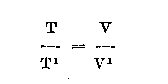
will expand or contract in proportion to any given temperature change. As compartments are not gas-tight, says L. C. Ilsley in Serial No. 2813 of the U.S. Bureau of Mines, such expansion and contraction will force the atmosphere out of the compartment upon expansion and suck the surrounding atmosphere into the compartment during contraction, hence the term "breathing." In the discussion of experimental tests undertaken, mention is made that the rate with which the compartments were filled by the breathing action is interesting because it has a bearing on the probable frequency of explosion within a compartment were it to be surrounded with methane in a mine. This series of tests emphasises the necessity of using permissible equipment and the desirability of having all makes of equipment used at the face workings proved by test. The value of the test is to ascertain by trial (1) that there are no openings overlooked ; (2) that flanges and joints are properly designed ; and (3) that the strength of the casings will withstand explosion within a compartment.
The Need for Safety.
Dealing with the question of Safety in American Mining at the annual meeting of the National Coal Association, P. H. Penna said that in no other industry may better results be achieved by such an educational programme than in coal mining, not only because of the inconvenience or expense brought upon the company by the accidental injury and death of individual workmen, but because in this industry, far more than in ordinary manufacturing enterprises, the carelessness of one man may bring injury and death to a large number of his fellow workmen. It should not be forgotten, however, that recklessness is a typical American characteristic. It is not only in the coal mining industry that deaths in the United States are at a higher rate than in Germany, England or other European countries. The same thing is true of practically all occupations and is to be accounted for to a very considerable extent by the unfortunate readiness of American working men to take chances. In most industries the individual pays the penalty of his own heedlessness. In our industry, on the other hand, only too frequently the carelessness of one causes the injury of others, as well as destruction of property and loss of time for the operator. Your Committee feels that it cannot put too much emphasis on the importance of the training of the individual in "Safety First" knowledge and habits. It believes that money expended in promoting proper carefulness on the part of mine employees will be returned many fold to the operators incurring it.
 |
 |
| Names mentioned in this article | |
 |
 |
| Name | Age | Occupation | Notes |
|---|---|---|---|
| Ilsley, L. C. | |||
| Penna, P. H. | |||
| Teagle, Walter C. |
 |
 |
| Related Articles | |
|
|
| Pub. Date | Article (Newspaper) |
|---|---|
| 11 Sep 1926 | American Notes (The Science and Art of Mining) |
| 07 May 1927 | Some American Notes (The Science and Art of Mining) |
| 08 Jun 1927 | Some American Notes (The Science and Art of Mining) |
| 10 Sep 1927 | Some American Notes (The Science and Art of Mining) |
| 24 Sep 1927 | Some American Notes (The Science and Art of Mining) |
| 07 Apr 1928 | Some American Notes (The Science and Art of Mining) |
| 19 May 1928 | Some American Notes (The Science and Art of Mining) |
| 16 Jun 1928 | Some American Notes (The Science and Art of Mining) |
| 28 Jul 1928 | Some American Notes (The Science and Art of Mining) |
| 25 Aug 1928 | Some American Notes (The Science and Art of Mining) |
| 08 Sep 1928 | Some American Notes (The Science and Art of Mining) |
| 20 Oct 1928 | Some American Notes (The Science and Art of Mining) |
| 09 Feb 1929 | Some American Notes (The Science and Art of Mining) |



 Contains public sector information licensed under the

