


| Newspaper Articles |

|
Newspaper Articles |
 |
 |
29th January 1920
Whitehaven's Oldest Working "Collier"
George Stephenson, Aged 87
The oldest working collier in Whitehaven, probably in Cumberland, is Mr. George Stephenson, who is employed at William Pit, Whitehaven, as a surface hand. The story of his life, taking us back over no less a period than 87 years, involves to some extent that of the Whitehaven collieries, and the immense changes that have taken place in Whitehaven's oldest and chief industry.
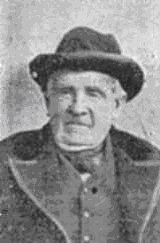
(Photograph by The Romney Studio, King Street, Whitehaven.)
He was born at Parton, in 1833. He was the eldest of a family of four boys and three girls, whose parents were also natives of Parton. The Parton drifts, in the Whitehaven Colliery were begun one year before George was born. The coal from them was brought along the wagon-way, and through a long tunnel that used to exist until quite recently. George's father had the contract for conveying the coal by wagon, and then by cart to the shipping at Whitehaven. Railways with locomotives were not then existing. The wagon-way was an improvement on an earlier mode of conveyance, when the coal was carted or brought by pack-horses. As a depot for the coal brought from the eastern part of the colliery by wagon-way, there was at one time a large staith situated on the site on the present Cab Stables, whence the coal was carted to the shipping. To cheapen the cost of the carriage, Bransty Arch was built to carry the coal across Tangier Street and direct to the harbour. That arch was completed in 1803; and was still in operation for the landward pits on the eastern side of the town when the Parton coal was coming along Parton wagon-way, past William Pit. As a contractor, George's father kept several horses, and his eldest boy soon became useful to him. Williamson's School at Parton was free, but George never went to school. The only lessons he received were in the school of his life's experience. As soon as he was able he began to assist his father, bringing coal from Lamb Hill Pit, not far from Moresby Church. He worked with his father until he was 24 years old. Then he went as a collier to William Pit.
William Pit was begun in 1804 and took eight years to complete it, though coal was first shipped from it in 1806. Croft Pit is the oldest of the existing pits of the Whitehaven Collieries. It dates back to somewhere about the year 1754. Wellington Pit was begun in 1840. It may be explained that the workings of the Whitehaven Colliery past and present extended from Lowca Beck on the north to Tarnflat Hall on the south, and from near Keekle Beck on the East to the seaward workings on the west. From the earliest times the pits on the north-east side of the town were called the Whingill Collieries, and those on the southwest side the Howgill Collieries. The earliest pits were very primitive, employing only a few hands, and the number of them opened and later abandoned was great. The site of many, of the names of which there is a record, cannot now be identified.
George Stephenson remained hewing at William Pit until he was 68 years of age. Then he got a light job as a stable man underground, for two years, after which he was deemed too old for underground work, and he was given a light job on the surface, at which he continues.
Many are the changes that George Stephenson has seen in the working conditions of the coal mines. Those changes, be it noted, have been the direct consequence of applied chemistry of the mine and the invention of tramways, locomotive and stationary steam engines for pumping, the endless rope for long distance haulage, and the improved means of ventilation by fans.
In regard to winding, when Stephenson went to William Pit, and for many years afterwards, the winding was done with baskets. Of course there was steam power. Look further back and there was no such thing as steam power known, and the haulage used to be done by means of a ginn, or winn gees, drawn by horses. It is from these circumstances and the fact that there was a pit or pits there in early times that we have the place name Ginns.
There was no endless rope haulage in William Pit in Stephenson's early days; but there were ginns to bring baskets to the top of the inclines or pit brows, and then horses brought them out to the shaft. Before the introduction of endless rope underground haulage there were over one hundred horses and ponies kept in the underground stables of William Pit. It was over a final withdrawal or horses from the pits that the last long strike occurred. But imagine the condition when before mechanical appliances were invented, and when coal was first worked from the outcrop, it was borne on the backs of men and women. Stephenson and his companions got a ride in baskets placed on trams for a certain distance, but they had much further to walk, and it took them longer than it does now. As to hours of work he has known them be 16 hours from bank to bank, though it must not be supposed that this was a usual condition. Nine or ten hours at the coal face is spoken of as a usual working day in much earlier times, plus, time for travelling.
The safety lamp was in use, that had been invented by Sir Humphrey Davy in 1815. That was the year of the battle of Waterloo, a battle insignificant compared with some that we have seen since, but terrible enough at the time; and here we reflect on the difference between the inventions of those men for the taking of life, and of such inventions as this, for the purpose of saving life. We see that all kinds of applications are being made to Courts of Award, asking for the nation's money for the inventions of war. How different the men of science, like Davy, who worked simply for the love of their work, and sought no patent and no monetary reward for their inventions. Before the invention of the Davy lamp the occupation of the coal miner was indeed a terribly hard and dangerous one. The only means of avoiding the danger of explosions, by efficient ventilation, was then unknown; and very little was known except from fearful experiences of the nature of the gasses engendered in the pit. Marsh gas, which is a product probably of the decomposition of coal, is lighter than air, and therefore is found in the highest parts of a coal working. When mixed with twice its volume of oxygen, which is one of the two constituents of atmospheric air, it explodes, in presence of a naked light. Otherwise it burns quietly with a pale blue flame. In the earliest days "firemen" used to go with naked lights looking for this gas, and setting it afire, throwing themselves on the floor in case there should be an explosion. This was in small mines, in which very few men were employed — fewer than 90 in all, may be. All the same we can quite understand that the number of accidents from explosion must have been frequent. Pay-bills were common with entries of "firing damp," "oyle and brandy for a burnt man," "payments to burnt men," and so on. Previous to the introduction of the Davy safety lamp, Carlyle Spedding in 1730 invented a machine with flint and steel, for showing a light by a continuous succession of sparks. This Carlyle Spedding was the uncle of the wife of Dr. W. Brownrigg, M.D., F.R.S., a Cumberland man, who practiced in Whitehaven, and retired and died at Ormathwaite, in 1800, aged 88 years, and from Saltom Pit, where a blower of gas was struck, he led the gas by piping to Dr. Brownrigg's laboratory, and the doctor made a number of experiments on the pit gas. Dr. Joshua Dixon who was the originator of the Dispensary from which the Whitehaven and West Cumberland infirmary arose, published an account of Dr. Brownrigg's work and claimed that he was entitled to share with Cavendish the honour of the discovery of carbonic acid gas.
Before 1872 at William Pit, they were paid 10d a basket for coal, and later 1s a basket. A William Pit basket held 11 cwt. With a full week of six days they were lucky if they averaged 30s a week, though they were paid fortnightly. Prices of food, clothing and rent, were of course much smaller than in later years. The same thing in a much greater degree has to be remembered when we read that at Greenbank Pit in 1675 haggers were paid a fixed wage of 81/2 d a day; and their day's work was 21 burthens of coal each, eight burthens making a ton.
Pay was fortnightly. When the pay of all the pits coincided on the same day, that was known in the town as "the big pay day," when it was otherwise, it was "the little pay day." Some of the working party went and received the wage, and met the rest at some public house to give them their share. That often resulted in a diminution of the amount left to take home. There was a system in vogue in Stephenson's early time by which colliers widows had the privilege of paying so many shift men at their houses, the widow having a commission of a penny in the pound or part of a pound on all sums they paid out.
Stephenson was never injured except once. There was fatal explosions at William Pit, but he was never in one. But he was once caught by a fall of roof, and had his right forearm, from above the elbow, fearfully torn. Dr. Robt. Lumb, who was then the colliery doctor, wanted to amputate the arm. He told him that if he did not have it taken off it would give him lock-jaw, or tetanus. Stephenson would not hear of such a thing. He said his father had a leg taken off, and his brother had an arm taken off, and he was not going to lose his arm. As luck would have it, in the Infirmary, he escaped "mortification" and "jaw-lock," and came round all right, and hagged coal with that arm for 30 years after. But as is still plain to be seen it must have been a terrible arm. Stephenson is living at Harras Moor with his married daughter and grandson, at North Pit Cottage. He has lived at Harras Moor nearly 60 years — for 50 years of that period in one house. He travels to the pit and back every day. He never had a drop of medicine in his life, he says; all that he ever wanted was a little drop of rum, and it always mended him. He says he does not remember that at any time he was under a sense of unhappiness as far as his work was concerned. "I never went before t' maisters, but I was always weel dealt wid. I believe I can say this: I have lived till I am 87 years old, and I don't owe a shilling in the world. When my wife died I expected a bill or two might have come in, but I never got one. I am making £2 a week more than I did when I was a young man." He said, jocularly, adding with a quick change of tone, "but Mr. Steel has been kind to me; Mr. Steel is a gentleman." Apropos of Mr. Stephenson's appreciation of the value of the proper use of rum, without which he vows that he would never be able to get up to Harras Moor in these days, a story is told of his experience last New Year's Day, which he will neither affirm nor deny. He thought he would not see many more New Year's Days, and without being either "sinking in despair" or "priest wi' grief and care," he thought he would take Solomon's advice, as paraphrased by Bobby Burns, and make a day of it "wi' liquor guid ta fire his bluid"; so he went to the only public-house at Harras Moor and tried. But he found that with the liquor at controlled weakness, within the limits of his exchequer, he was unable to say:
"Kings may be bless'd, but George was glorious,
O'er a' the ills o' life victorious."
It could not be done at the price, and when he had finished he felt he could say that he had enjoyed himself wisely and not too well!
Newspaper transcript kindly provided by
West Cumbria Mines Research.
 |
 |
| Names mentioned in this article | |
 |
 |
| Name | Age | Occupation | Notes |
|---|---|---|---|
| Brownrigg, W., Dr. | |||
| Cavendish, — | |||
| Davy, Humphry, Sir | |||
| Dixon, Joshua, Dr. | |||
| Lumb, Robert, Dr. | |||
| Spedding, Carlyle | |||
| Steel, — | |||
| Stephenson, George | 87 | Miner |
|
|
| Links to Collieries/Mines mentioned in this article | |
|
|
 | Whitehaven Colliery |
| | William Colliery |




 Contains public sector information licensed under the

