


 |

|

|

| |
 |
 |
|||
July, 1937
The Mineralogical Investigation of Metalliferous Deposits
Drawings and Photographs accompanying the article
| Sample | Description |
|---|---|
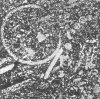 | Fig. 1 — Unaltered limestone, Rookhope, Co. Durham, showing the remains of small organisms (Thin section, X25) |
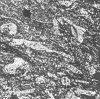 | Fig. 2 — Limestone, showing remains of organisms replaced by quartz, fluorspar and galena. Rotherhope Fell mine, Cumberland (Thin section, X25) |
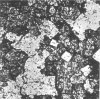 | Fig. 3 —Limestone, recrystallised and partly replaced by fluorspar (white). Boltsburn mine, Co. Durham (Thin section, X25) |
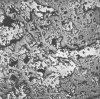 | Fig. 4 —Limestone (grey) replaced by dolomite (rhombs), and zinc blende (white). Nentsbury mine, Cumberland (Polished section, X42) |
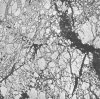 | Fig. 5 —Sulphide ore, Silver Coinage mine, New Mexico. Pyrite (white), replaced by chalcopyrite (light grey), and zinc blende (dark grey) (Polished section, X70) |
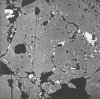 | Fig. 6 —Sulphide ore, Stevenson-Bennett mine, New Mexico. Zinc blende (dark grey), containing tiny spots of chalcopyrite with small veins of galena (white) (Polished section, X65) |
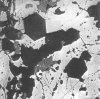 | Fig. 7 —Silver ore, Hawkeye mine, New Mexico. Quartz (black) ; tetrahedrite (light grey) ; zinc blende (dark grey) ; chalcopyrite (white) (Polished section, X120) |
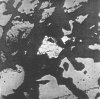 | Fig. 8 —Gold ore, Mormon mine, New Mexico. Native gold (centre of field), enclosed in limonite (black) which has replaced pyrite (grey) (Polished section X160) |
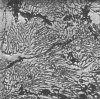 | Fig. 9 —Bismuth ore from the Memphis mine, New Mexico. Tetradymite (grey), has been replaced by bismutosparite (black) (Polished section, X450) |
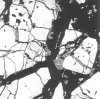 | Fig. 10 —Copper ore from the enrichment zone, Torpedo mine, New Mexico. Pyrite (white), partly replaced by chalcocite (light grey) (Polished section, X65) |
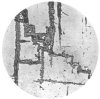 | Fig. 11 —Galena (white) oxidised to cerussite along cleavages. Cowgreen mines, Co. Durham (Polished section, X25) |
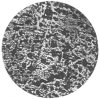 | Fig. 12 —Limonite, West level, Boltsburn, Co. Durham. The mineral has replaced siderite (black) (Polished section, X70) |
Article reproduced from a copy of the magazine held at National Mining Museum Scotland, Newtongrange, Midlothian.




 Contains public sector information licensed under the

