



|

|

|

|
|
 |
 |
|||
Local Records
1813
This year, a society was instituted in Sunderland for the prevention of accidents in coal mines. [LRSN]
April 16. — 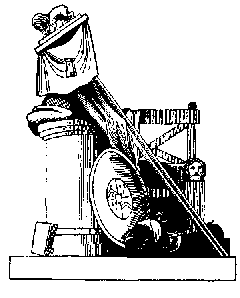 April 16. Died, at his house in Portland Place, London, after an illness of two days, Sir Matthew White Ridley, of Blagdon, in Northumberland, bart., in the 67th year of his age. May 3rd, he was interred in time family vault in St. Nicholas’ church, Newcastle.— The concourse of sorrowing spectators on this melancholy occasion was very great. He was the representative of Newcastle in eight successive parliaments; also for many years an alderman of that corporation. He commanded the loyal Newcastle associated volunteer infantry from its first establishment, in 1798, to the period of the general dismissal of the volunteers in 1813. He was one of the oldest members of the merchants’ company, and at the period of his death had been 35 years its governor. In 1819, a beautiful monument to his memory, by Flaxman, was placed in the nave of St. Nicholas’ church. It displays, in very high relief, a full length figure of the deceased, as large as life, dressed in a Roman toga, and standing in a graceful and dignified attitude, with other attributes, together with a shield charged with the family arms. There is a large portrait of Sir M. W. Ridley, hart., engraved by Fittler, from a painting by Hoppner. There is also a reduced copy of this published by John Sykes. Lady Ridley died, August 3rd, 1806. On the 18th, the body arrived in Newcastle from London, and was interred in the family vault in St. Nicholas’ church the day following, The preceding wood-cut shews a portion of Sir M. W. Ridley’s monument. [LRS]
July 17. — An unfortunate accident happened by fire damp at Collingwood Main colliery, on the river Tyne, by which eight men were killed, and two severely burnt. Several horses also suffered. [LRS]
August 1. — Died, after a short illness, universally beloved and lamented, Sir Henry Vane Tempest, bart., only son of Sir Henry Vane, L. L. D. prebendary of Durham, baronet, by Frances, daughter of John Tempest, of Old Durham, esq., and sister, and at length sole heir of John Tempest, of Old Durham, esq., M. P. In the year 1794, Sir Henry Vane Tempest, was elected for the city of Durham, at a time when, from his long absence in a foreign country, his precarious health, and the total want of intelligence, the knowledge of his existence was rendered extremely doubtful. This honourable testimony of respect towards his family was always acknowledged by him with pride and gratitude. In 1807 he was returned with Sir Ra. Milbanke, to represent the county in Parliament. Every succeeding year increased the confidence of his constituents, and afforded him fresh opportunities of proving that he was not unworthy of their choice, by his unremitting attention to their interests. On the dissolution of parliament in 1812, he was again returned without opposition; this honourable re-election and universal regret expressed at his death, are the best and surest proofs of the purity and fidelity with which he discharged the important trusts committed to his care. — Sharp's Hartlepool. [LHTB]
August 1. — 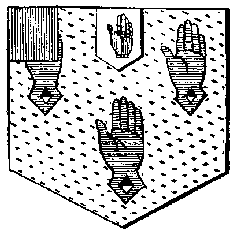 Died, after a short but severe illness, at his seat at Wynyard, near Stockton, Sir Henry Vane Tempest, bart., M.P. for the county of Durham, and on the 12th, his remains were deposited in the family vault of Long-Newton. The melancholy procession left Wynyard at ten o’clock, attended by an immense train of his friends and tenantry, passing through Wolviston, Stockton, and Elton, to Long-Newton. The road was thronged with anxious spectators, drawn from all parts of the county, to pay the last tribute of respect to the memory of the deceased. At two o’clock, the funeral procession reached Long-Newton, time ancient residence of the Vane family. The pall was supported by J. D. Nesham, R.E., D. Shafto, Edward Shipperdson, Richard Wright, Cuthbert Sharp, Thomas Wilkinson, John Wharton, and Robert Surtees, esquires. The chief mourners were M. A. Taylor, esq., M.P., and Mr. Vane. The church of Long-Newton was crowded to excess, and time solemn service was frequently interrupted by the sighs and tears of the congregation. It seemed as if every one present had lost his dearest friend and nearest connexion, so much was Sir H. V. Tempest beloved and lamented. May 31st, 1820, Lord Stewart (now marquis of Londonderry) presented a whole-length portrait of Sir Henry Vane Tempest, in a splendid frame, to the Exchange Coffee-room at Sunderland. [LRS]
August 1. — Died, at Wynyard, Sir. H. V. Tempest, Bart., M.P. for the County of Durham, aged 41, after a short but severe illness. On the 12th, his remains were deposited in the family vault at Longnewton. [LRSN]
September 2. — An ingenious and highly interesting experiment was performed in the presence of a vast concourse of spectators, on the railway leading from the collieries of Kenton and Coxlodge, near Newcastle, by the application of a steam-engine, constructed by Messrs. Fenton, Murray, and Wood, of Leeds, under the direction of Mr. John Blenkinsop, the patentee, for the purpose of drawing the coal wagons. About one o'clock the new invention was set a-going, having attached to it sixteen chaldron wagons loaded with coals, each wagon with its contents weighing four tons or thereabouts, making altogether an aggregate weight little short of seventy tons. Upon perfectly level road, the machine so charged, it was computed would travel at the rate of three and a half miles per hour, but in the present instance its speed was short of that, owing, no doubt, to some partial ascents in the railway. Under all the circumstances, it was very highly approved of, and its complete success anticipated. After the experiment was finished, a large party of gentlemen connected with coal-mining partook of an excellent dinner provided at the Grand Stand for the occasion, when the afternoon was spent in the most agreeable and convivial manner. [LHTB]
September 2. — George Stephenson, then an engine-wright, placed his first locomotive steam engine on the tramway leading from the Kenton and Coxlodge collieries. He had previously minutely observed the improvements made by Wm. Hedley, mining engineer at Wylam colliery, and also one of Blenkinsop's Leeds engines. Stephenson's 2nd engine was placed on the Killingworth railway, July 25, 1814: still the steam power and the horse power were near upon a par in point of cost; and the locomotive might have been condemned as useless, had not Mr. S. applied the steam blast, and thus doubled the power of the engine. This same year (1813) Sir Rd. Phillips, and also Mr. Edgeworth, predicted the adoption of railways, as a mode of rapid transit. [LRSN]
September 28. — The Hall Pit at Fatfield colliery, in the parish of Chester-le-street, fired from the foul air, and thirty-two men and boys were killed. [LHTB]
November. — A pitman removing a stone from the bottom of the engine pit, at Cowpen colliery, at the depth of 104 fathoms, received a blow on the face from some animal, which was lurking underneath. The terrified pitman, after some time recovered himself, and calling others to his assistance, they attacked the enemy, which proved to be a fine silver eel twenty-two inches long. [LHTB]
December. — At Jarrow colliery, a large stone fell on two pitmen, and crushed them to death. [LHTB]
December 24. — About half-past one o'clock on the morning, an explosion took place in Felling colliery, by which nine men and thirteen boys were hurried into eternity, several others severely burnt, and all the under-ground horses but one destroyed. The accident occurred at the time of calling course, or when one set of men were relieving another. Several of the morning shift men were standing round the mouth of the pit, waiting to go down, when the blast occurred, and the part who had just descended met it soon after they had reached the bottom of the shaft ; these were most miserably burnt and mangled. Among the unfortunate sufferers were the two overmen of the colliery, Mr. William Haswell and Mr. Thomas Morrows, and two of the deputies, Mr. Robert Stoves and Mr. Martin Greener. The deceased men left eight widows and eighteen fatherless children. [LHTB]
December 28. — In a pit belonging to Mr. Burdon, of Hartford, a man named Nicholson, upon whom a large stone fell while ascending the pit, had his head cleft in two, and died instantly ; while another, in the same loop, had his thigh dreadfully lacerated, but kept his hold both of the rope and of the dead man till they reached the top. Two men at the bottom of the pit were also injured. [LHTB]


 |
 |
| Sources | |
|
|
- LHTB — Local Historian's Table Book of Remarkable Occurrences Connected with the Counties of Newcastle-Upon-Tyne, Northumberland and Durham by M.A. Richardson. Published in five volumes in 1844.
- LRS — Local Records or Historical Register of Remarkable Events by John Sykes, Published in 1833 in two volumes
- LRSN — Local Records of Stockton and the Neighbourhood by Thomas Richmond. Published in one volume in 1868.



 Contains public sector information licensed under the

