


| Gallantry |

|
Gallantry | ||
 |

|
 |
||
Awards for Gallantry
 |
Ernest William Kent |
 |
|
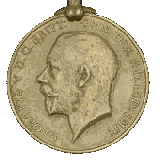
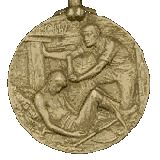
Edward Medal | |||
| Date: | 25 Oct 1938 | ||
| Colliery: | Hackney Wick Stadium | ||
| Occupation: | Labourer | ||
Whitehall, December 6, 1938.
His Majesty The King has been graciously pleased to award the Edward Medal to Ernest William Kent in recognition of his gallantry in the following circumstances:—
On the night of the 25th October 1938, gangs of workmen were engaged in concrete piling work at the Hackney Wick Stadium. Metal cylinders about 15 inches in internal diameter were being sunk into the ground, the earth inside them being then removed. At about 2.30 a.m. a gang of three workmen under the charge of Herbert William Baker encountered an obstruction at the bottom of one of these cylinders, which had been sunk to a depth of some 18 feet. Baker, who was a small man, decided to have himself lowered down the cylinder, presumably with the idea of clearing the obstruction with his feet. He was advised against doing so by one of the workmen who said that he smelt gas, but Baker persisted and was lowered feet foremost into the shaft hanging with outstretched arms on the hook of the winch rope. When he was about 12 feet down he shouted for help and the men began to pull him up, but before he reached the top he lost his grip on the hook and fell to the bottom.
Messages for help were sent but in the meantime Kent, one of the labourers, who was also a small man, volunteered to be lowered head first down the cylinder in an attempt to pull Baker up with his hands. His feet were lashed to the winch cable and he was lowered head first for some distance but then gave signs of distress and was hauled up in a state of semi-collapse and bleeding from the mouth. In the meantime the Fire Brigade and Police had arrived and an oxygen cylinder with the jet partially turned on was lowered to a position near Baker's head in an effort to improve the atmosphere until a rescue could be effected. The ground surrounding the cylinder was also dug away to enable the upper 3 foot section to be unscrewed, thus reducing the depth to about 15 feet. These operations had taken over an hour and it was realized that there was no chance of getting Baker out alive by these means. A call was made for a volunteer small enough to descend the shaft and another workman volunteered and was lowered head first into the cylinder. A short distance from the top, however, a ridge round the inside of the tube jammed his shoulders and he had to be drawn up again. Kent, who during this time had partially recovered from the eftects of his first rescue attempt then volunteered to make a further effort, and as there appeared to be no other chance of freeing Baker alive his offer was accepted and he was again lowered into the shaft. He succeeded in grasping Baker and as he was drawn up he was heard to be gasping for breath and called out "Quick, Quick." He just had sufficient strength to retain his grip until helpers round the shaft top caught Baker's arms when he collapsed, practically unconscious. Both men were taken to Hospital, but it was found that Baker was dead.
Kent showed great initiative and courage in his two efforts to rescue Baker. He was secured by a rope, but there was a serious risk of his becoming jammed in the narrow cylinder at a depth from which it would have been difficult, if not impossible, to extricate him, and there was also grave risk of suffocation. The time occupied in his second attempt was about four or five minutes. It is clear that rfe risked his own life in his attempts — unhappily not successful — to save the life of his fellow workman.
Source: London Gazette (20 Dec 1938)
 |
 |
| Researchers | |
|
|
| Researcher | Date | Interest | |
|---|---|---|---|
| Paul Kent | 28 Jun 2014 |
My uncle lived in Durham. His name was Ernest Kent. I believe this gentleman is my uncle. I'm research his life |
|
If you are researching Ernest William Kent (e.g. for family tree purposes) and you would like to hear from others with the same interest then please complete the details in the following form. We will show the information you provide on this page so that you can be contacted.



 Contains public sector information licensed under the

