


| Gallantry |

|
Gallantry | ||
 |

|
 |
||
Awards for Gallantry
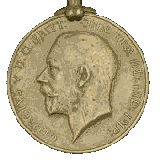 |
Azariah Clarke |
 |
|
Edward Medal | |||
| Date: | 02 Jul 1937 | ||
| Colliery: | Holditch Colliery, North Staffordshire | ||
| Occupation: | |||

Whitehall, July 28, 1938.
His Majesty The King has been graciously pleased to award the Edward Medal to Azariah Clarke, Captain of the Rescue Brigade at Holditch Colliery, North Staffordshire, in recognition of his gallantry in the following circumstances:—
On the 2nd July, 1937, at about 5.45 a.m. a fire started in the holing of the Four Feet Seam at Holditch Colliery, North Staffordshire. The fire spread rapidly but of the 55 men employed in the affected area at the time all except two succeeded in withdrawing from the danger zone. As soon as it was found that the two men were missing, unsuccessful search was made for them. At 6.50 a.m. an explosion occurred and one of the search party was afterwards found to be missing.
Meanwhile a call for the Colliery Rescue Brigade had gone out, and by 7.30 a.m. Azariah Clarke had assembled three others at the pithead and proceeded to lead them below ground. The party met the managing director of the colliery in the neighbourhood of the fire, and he instructed them to search for the man who had been lost after the explosion. They accordingly donned their breathing apparatus and started on their search in the direction of the face. The atmosphere was hot, dusty and foul with gas and smoke, and on reaching a fall whieh blocked the way into the face they retraced their steps, continuing meanwhile their search for the missing man, but without success.
The Rescue Brigade — now increased to five by the arrival of another member — next went to search for the two men who had been lost at the time of the original fire. Still using their breathing apparatus, they stumbled in the smoke up a steep road, parts of which had a gradient of 1 in 2½ to 1 in 3. Soon after 10 a.m., while they were thus engaged, a severe explosion occurred resulting in the deaths of 27 persons most of whom had been sent down for the purpose of erecting stoppings to seal off the fire. The Rescue Brigade were but slightly affected by this explosion and, having made their way to a telephone, they arranged to come out to secure fresh breathing apparatus since their supplies of oxygen were running low.
During the period of some two hours, during which the Brigade had been searching for the lost men under Clarke's leadership, they had survived two other explosions of lesser intensity (as well as the major explosion to which reference has been made) and had been working throughout in conditions of the greatest difficulty and danger with the realisation, moreover, that further explosions might occur at any moment.
Having secured new apparatus Clarke again led the Brigade into the danger zone. Travelling down the road over falls of ground and derailed tubs, and past other debris produced by the explosion, and extinguishing a fire encountered on the way, they came upon a number of badly injured men and dead bodies. They made the injured as comfortable as possible, and arranged for stretchers to be sent in.
On the arrival of further assistance some members of the Brigade helped in evacuating the injured and the dead, while Clarke and others made a further examination of the workings with a view to ensuring that no living person had been left behind. By 3.35 p.m. all the men known to be alive had been recovered, and as it was thought that there was a considerable risk of a further explosion all the men were withdrawn from the mine. The Rescue Brigade had worked almost continuously in breathing apparatus since 7.30 a.m. Later on doubt arose as to whether there might still be some injured persons alive in the pit, and at 6 p.m. Clarke again led a brigade down the mine. After an exhaustive search they found no live men below, and returned to the surface at 8.30 p.m. In view of the serious nature of the brigade's report on the conditions in the mine it was decided that no more men should be allowed to go down until the fire area had been flooded.
The courage, initiative, endurance, and qualities of leadership displayed by Clarke throughout these lengthy operations were outstanding.
Source: London Gazette (05 Aug 1938)
 |
 |
| Researchers | |
|
|
If you are researching Azariah Clarke (e.g. for family tree purposes) and you would like to hear from others with the same interest then please complete the details in the following form. We will show the information you provide on this page so that you can be contacted.



 Contains public sector information licensed under the

