


| Gallantry |

|
Gallantry | ||
 |

|
 |
||
Awards for Gallantry
 |
James Pollitt |
 |
|
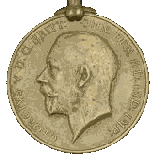
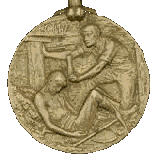
Edward Medal | |||
| Date: | 22 Aug 1935 | ||
| Colliery: | South Kirkby Colliery, Yorkshire | ||
| Occupation: | |||
Whitehall, April 7, 1936.
His Majesty The King has been graciously pleased to award the Edward Medal to George William Beaman, Norman Baster and James Pollitt, in recognition of their gallantry in the following circumstances:—
On the evening of the 22nd August, 1935, two explosions occurred at South Kirkby Colliery, Yorkshire, in a district about 1¾ miles from the shaft. It was thought that these were due to a gob fire and it was decided to seal off a part of the district by erecting stoppings.
At 3 p.m. on the 23rd August this work was in progress, and there were 21 men in the district, some near to the face and the others, of whom Beaman was one, at distances varying up to some 100 yards away. A further explosion then took place, severely injuring a number of the men. Beaman and two others, who had rescue apparatus, at once proceeded to look for and succour the injured, and with the assistance of others who followed shortly afterwards ten men were carried out of the district alive. One died almost immediately, eight within a few days, and one recovered. During the progress of these operations, which involved repeated journeys to and from the face, some of the rescuers who were not equipped with special apparatus were considerably affected by fumes.
It was found that everyone had been accounted for except a man named Dale; and although there was an increasing risk of a further explosion owing to accumulations of gas, search for him was renewed by Baster, who was the colliery agent, with the manager and four rescue men, including a man named Ball. They located Dale but he was found to be dead. They proceeded to remove his body, but while they were doing so a further explosion occurred and all six members of the party were burned. This explosion was severe enough not only to cause injury to the rescue party, who were comparatively near the face, but to affect those nearer the shaft who were looking after the men first injured. Baster got back and did what was possible to reassure these men and then with three others (of whom Beaman was one) he went in and removed Dale's body and later went in again for a certain distance to look for Ball, one of the rescue party injured by the second explosion, who was said to be missing. Baster, who had no apparatus, was this time so much affected by fumes and fatigue that he had to retire, but Beaman and another man conducted some further search without success. It was then reported that Ball had reached the shaft.
Later in the evening, however, after the rescue parties had left the mine, it was found that Ball was after all still missing. There were reasons for fearing that a further explosion might shortly occur and that a fresh search might only swell the casualty roll; but volunteers were anxious to descend the mine and make a further attempt, and one of the rescue parties so formed entered the district and succeeded in finding Ball and bringing him safely to the surface. In this final operation, which was conducted at once with determination and prudence, J. Pollitt acted; as captain of the rescue party.
Great courage and pertinacity were displayed by many others who took part in these operations and it has not been easy, to discriminate between those concerned, but it is considered that Beaman rendered services of outstanding merit in the first stage, Baster in the second stage and Pollitt in the final stage of the rescue operations.
Source: London Gazette (17 Apr 1936)
 |
 |
| Researchers | |
|
|
If you are researching James Pollitt (e.g. for family tree purposes) and you would like to hear from others with the same interest then please complete the details in the following form. We will show the information you provide on this page so that you can be contacted.



 Contains public sector information licensed under the

