


| Gallantry |

|
Gallantry | ||
 |

|
 |
||
Awards for Gallantry
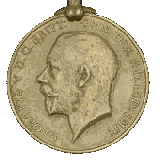 |
John Barnard |
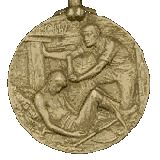 |
|
Edward Medal in Silver | |||
| Date: | 25 Sep 1919 | ||
| Colliery: | Wesselton Mine, Kimberley | ||
| Occupation: | |||
Whitehall, 18th October, 1920.
His Majesty the King has been graciously pleased to award the Edward Medal in silver to Isaac Barnard and John Barnard under the following circumstances:—
On the 25th September, 1919, a great rush of mud occurred at the Wesselton Mine, Kimberley. The rush came from two places, forty-five feet apart, and filled up two of the passes for a distance of about a hundred feet.
At first it was thought that all the workers had escaped; but, on inquiries being made, it was found that fourteen natives were missing. It is customary after a mud rush to leave the mud alone for two or three days before attempting to clear it away; but, as men were missing, clearing operations were started at once and after twenty-four hours work sounds were heard which indicated that someone was alive in the mud. It was decided to try to reach the imprisoned men over the top of the mud, which was intensely hot, and the two Barnards, when a passage had been partly cleared, volunteered to make the attempt. The temperature inside the tunnel was stifling; but, with the aid of an air-hose, the Barnards managed to get forward a considerable distance. The manager of the mine considered that the heat was unbearable, and shouted to the Barnards to come back; but they declined to return, and eventually succeeded in getting through. They found two natives stiall alive, and managed to get them out, while they themselves followed the natives, but both suffered severely from the effects of the intense heat, and, after crawling out with great difficulty, were unable to walk without assistance.
It was not until three days later that the bodies of the other twelve natives were recovered, and the two men rescued undoubtedly owed their lives to the action of the Barnards, who showed the greatest bravery and determination. Had another rush of mud occurred, the two brothers would have lost their lives, and, as they were well aware of this possibility, their action was a very fine one.
Source: London Gazette (22 Oct 1920)
 |
 |
| Researchers | |
|
|
If you are researching John Barnard (e.g. for family tree purposes) and you would like to hear from others with the same interest then please complete the details in the following form. We will show the information you provide on this page so that you can be contacted.



 Contains public sector information licensed under the

