


| Gallantry |

|
Gallantry | ||
 |

|
 |
||
Awards for Gallantry
 |
James Erskine |
 |
|
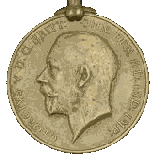
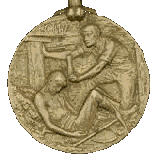
Edward Medal, First Class | |||
| Date: | 20 Jan 1917 | ||
| Colliery: | Cowdenbeath Colliery, Fife | ||
| Occupation: | |||
Whitehall, 16th July, 1917.
His Majesty the King has been pleased to award the Edward Medal of the 1st Class to George Shearer Christie, James Erskine, David Baird, Andrew Scott, Edward McCafferty and John Boyle.
On the 20th January, 1917, at about 10 a.m., while operations were being conducted for the widening of a shaft at the Cowdenbeath Colliery, Fife, a portion of the side of the shaft collapsed, throwing a workman named Newton down the mine to a scaffold about 90 feet below.
Scott, McCafferty and Baird at once descended in a large bucket or kettle to attempt a rescue. The whole of the shaft below the point at which the fall had occurred was in a highly dangerous condition: stones and rubbish were continually falling, and there was constant danger of a further collapse. Newton was found, alive and conscious, buried beneath about 12 feet of debris and pinned by some fallen timber. The men worked continuously from 10.45 a.m. until 7 p.m. They were joined at 11 a.m. by Christie, and at 1.30 p.m. by Baird, both of whom remained at work with the others until 7 p.m. During the whole of this period all five men were in serious danger.
At 12.45 Boyle descended in the kettle with two other men. While the kettle was descending a fall occurred, killing one of his companions and injuring another. Boyle drew the kettle to the side of the shaft until the fall was over, and then took the kettle again to the surface. He subsequently remained in charge of the kettle, exposed to constant danger, until 7 p.m.
At 7 p.m., after 9 hours' continuous and highly dangerous labour, the rescue party was relieved by other men. Unfortunately, Newton died at 8.30 p.m. Attempts to recover his body were then postponed until the shaft could be worked with greater safety.
Source: London Gazette (17 Jul 1917)
 |
 |
| Researchers | |
|
|
If you are researching James Erskine (e.g. for family tree purposes) and you would like to hear from others with the same interest then please complete the details in the following form. We will show the information you provide on this page so that you can be contacted.



 Contains public sector information licensed under the

