


| Gallantry |

|
Gallantry | ||
 |

|
 |
||
Awards for Gallantry
 |
William Charles Winch |
 |
|
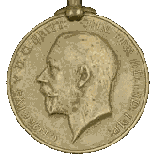
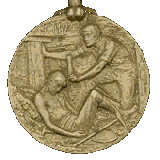
Edward Medal, Second Class | |||
| Date: | 09 Jul 1912 | ||
| Colliery: | Cadeby Main Colliery | ||
| Occupation: | Instructor | ||
Whitehall, May 26, 1913.
His Majesty the King has been graciously pleased to award the Edward Medal of the First Class to—
G. Fisher, Colliery Deputy of the Cadeby Mine.
H. Hulley, Colliery Deputy of the Cadeby Mine.
And the Edward Medal of the Second class to—
J. E. Chambers, Colliery Manager, Cortonwood Colliery.
W. H. Prince, Colliery Contractor.
Herbert Williamson, Mechanical Engineer at the Denaby and Cadeby Collieries.
Sergeant W. Winch, Instructor at Wath Rescue Station.
On the 9th July, 1912, two disastrous explosions occurred in the South Workings of the Cadeby Main Colliery, near Doncaster, originating at the coal face and spreading along the roads for distances of nearly half a mile.
H. Hulley and G. Fisher were among the first to explore the affected districts after each of the explosions. They assisted in attending to and removing the injured, and also in building stoppings to shut off the dangerous areas, in spite of the constant risk of further explosions and falls. Altogether Fisher was in the pit for about 12 hours and Hulley even longer, and, as both men were experienced pitmen, they were well aware of the imminent risk to their lives that they ran during the whole time. Their great courage and tenacity render their conduct conspicuous even among the many brave actions performed in connection with the disaster.
J. E. Chambers went down into the pit after the second explosion, immediately explored one of the roads near the point of origin alone, and was the probable means of saving two lives; he afterwards went through the district to assist in withdrawing all men from the workings.
W. H. Prince helped to organise rescue parties and assisted in saving life by the use of apparatus. With great presence of mind, and at much risk to himself, he personally extinguished a fire which occurred while he was so engaged, and afterwards he helped to build the stoppings.
Herbert Williamson superintended the rescue work in some of the roads after the first explosion. A fall caused by the second explosion prevented him from making any progress for a time; but he got together a body of men to clear a way over it, and then continued the work of rescue. He also returned to the affected roads by himself after the third explosion.
Sergeant Winch went with his brigade into the workings after the first explosion to help in the rescue work; he was knocked down by the second explosion, but proceeded inwards and assisted in saving lives by the use of his apparatus. He displayed great coolness in dealing with a fire, which broke out in one of the roads, and in keeping his men together to continue the work.
All these men displayed great courage and set a splendid example in the face of the disaster. Throughout their work the risk of a further explosion sweeping through the district was always present, and falls and fires were occurring in many places.
Source: London Gazette (27 May 1913)
 |
 |
| Researchers | |
|
|
| Researcher | Date | Interest | |
|---|---|---|---|
| Andy Freeman | 29 Oct 2011 |
William Charles Winch was my Great Grandfather |
|
| Andy Freeman | 01 Dec 2023 |
Family History. William Charles Winch is my Great Grandfather. |
|
If you are researching William Charles Winch (e.g. for family tree purposes) and you would like to hear from others with the same interest then please complete the details in the following form. We will show the information you provide on this page so that you can be contacted.



 Contains public sector information licensed under the

