


 |

|

|

|
|
 |
 |
|||

January, 1934
New Coal Preparation Plant at Ashington
The Ashington Coal Co. Ltd. have erected a central cleaning and grading plant incorporating both wet and dry methods.
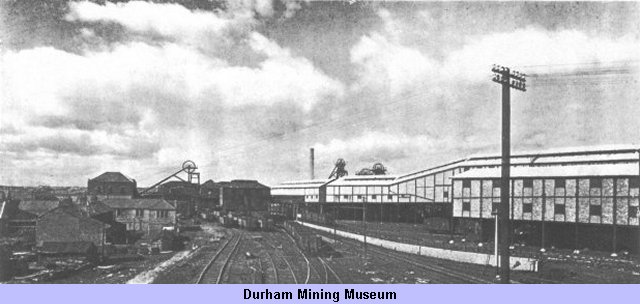
The depressed state of the collieries has provided a fruitful topic for discussion from many angles during the past 15 years. The fall in the quantity of coal raised from British pits has resulted in grave loss of income to shareholders and workmen alike. The establishment of the Coal Utilisation Council has shown, however, that the industry has now realised that it has a task beyond that of raising the coal, namely, that of selling it. The sale of coal is not dependent solely on the efforts of the salesman; his work must be supported by careful preparation for the market of the various grades that he finds are desired by the customer. It is not too much to say that a colliery may be made or marred by its coal preparation plant.
The problems of separating, cleaning and screening the several grades of coal raised from a multiplicity of pits are often of a highly complicated nature, requiring engineering practice of the highest quality and experience for their solution. An intricate problem of this character, in which several grades of house and steam coal were to be treated, faced the Ashington Coal Co. Ltd., and the means by which the problem was solved are described in the present article.
The Ashington Coal Co. Ltd. owns five collieries situated near the coast some 18 miles north of Newcastle. An annual output of 3,000,000 tons of first rate steam and house coal is at present raised from four collieries — Ashington, Woodhorn, Linton and Ellington; a fifth colliery, Lynemouth, is still in the early stages of development. Private railway lines connect the outlying collieries with Ashington, at which point the system joins the L.N.E.R. Group workshops, stores, laboratory and the general administrative offices are all situated at Ashington, the largest colliery in the group. Accordingly, when plans were formulated for co-ordinating and centralising the cleaning and grading plants belonging to the company, Ashington was the natural centre at which to build the additional plant required. Advantage was also taken of the opportunity entirely to replace the old heapsteads and picking belts here and to plan a comprehensive layout to include all the necessary facilities for dealing with coal from the outlying collieries.
The total tonnage from the three pits comprising the Ashington Colliery is 5,500 tons per day, of which 2,000 tons are partly steam coal and partly house coal from the Bothal shaft; 1,750 tons of steam coal and of another grade of house coal raised from the Carl shaft; whilst a further 1,750 tons of steam coal unaccompanied by house coal comes from the Duke shaft.
Circulation of the tubs
Most of the tubs used in these pits have a capacity of 8½ cwt. of coal, but there are a certain number of larger tubs, double the usual length, each with a capacity of 21 cwt. of coal. In all some 13,000 tubs are handled during a working day of 15 hours.
The tubs from the three pits gravitate on independent roads to their respective creepers A, Fig. 2, but arrangements are made whereby the creepers are interchangeable if required for any purpose. After being weighed in the machines B, the Duke and Bothal tubs gravitate to the reception siding, whilst the Carl tubs are lowered by retarders C. To facilitate the arrangement of the roads for the separate weighing of each tub, and to avoid level crossings, the Carl creeper is extended above the Bothal and Duke creepers at the head. The sidings are fitted with pneumatically-operated point controls and track brakes, which are worked from a position centrally placed so far as both the reception siding and the tipplers D are concerned, and enable the tubs to be released and controlled on their way to an appropriate tippler. On leaving the tipplers the empty tubs gravitate to the foot of the creepers E where they are raised to a sufficient height to enable them to gravitate to their respective shafts. For stone, empty tubs from the tipplers are diverted as required and filled at the stone hopper; they are then raised by creeper F to run forward along gantries to the stone heap.
A sloping gantry joining the main gantry near the screen house is provided with a creeper G and controller H and affords a means of communication between the surface level and the tub circuit. Also a creeper J is in service to bring the empty stone tubs back into circuit.
Flow of coal
The coal is discharged from the tipplers D on to jigging screens K, all below 4 in. being taken out, and the oversize delivered on to steel-plate picking belts L. Stone and intergrown coal having been picked out, the clean coal is delivered on to the pulsating loaders N which are fitted with perforated plates M to remove any undersize made in cleaning.
Any stone picked off the belts is placed on the bottom strand of the cross conveyors OO and then delivered by conveyor P to the stone hopper, from which tubs are loaded periodically and taken up creeper F to the stone heap. Intergrown coal is placed on the top strand of the conveyors OO, taken to the longitudinal conveyor Q and thence to a crusher. After crushing, the coal — together with the undersize from the pulsating loaders, which is delivered by cross conveyor S — is conveyed by the longitudinal conveyor R to the washery.
The third tippler and belt are arranged for use as an inspection unit; the coal below 4 in. is taken out on the pulsating loader, and delivered to cross conveyor S, to which reference has already been made.
Coal below 4 in. from each of the main screens K is delivered to five inclined band conveyors; two of these (UU) convey respectively the two house coals to the spiral separator plant Z. The three conveyors VVV deliver the coal below 4 in. to the Rheolaveur washing plant, which is arranged to treat the steam and the house coal separately, as required.
In the spiral separator plant the coal below 1 in. is extracted by screens X and delivered by means of the cross conveyor AA to a hopper; from here it can either be delivered into wagons direct as "rough smalls," or can be taken by conveyors BB and CC to the 200-ton bunker DD for treatment in the Birtley air cleaning plant FF. The dry cleaning plants are thus arranged in two sections, viz. :— the coal from 4 in. to 1 in. is cleaned on spiral separators, and below 1 in. on the Birtley air tables. Subsequently the latter coal is passed to the grading plant GG, making "singles," "pearls," "peas" and "duff." The spiral separators are arranged in two batteries each consisting of eight spirals. The 4 in. to 1 in. coal is graded into cobbles, trebles and doubles, these sizes being cleaned separately on the spirals and delivered by inspection belts to their respective pulsating wagon loaders. Refuse from the spiral plant is delivered direct to the conveyor T, which is common to all the cleaning plants, and discharges into the ropeway bunker.
The washing plant is arranged for making cobbles, trebles, doubles, singles, pearls, peas, and duff, together with a grade of workmen's coal which is delivered back to the screen house by conveyors HH and finally to a hopper over wagon roads by conveyor JJ.
Coal from other collieries
Coal from Ellington, Linton and Woodhorn collieries is brought in by wagon to the track hoppers LL, where it can be unloaded into one of the three hoppers for delivery into either of the dry cleaning plants, or into the washing plant, whichever may be appropriate to the physical condition of the material. The third hopper is provided with a crusher to reduce the large coal when necessary, and also the intergrown coal, preparatory to washing. The band conveyors W take the coal from these hoppers, throw-off carriages being provided to enable the feed to be taken to the appropriate cleaning plant.
Drawings and Photographs accompanying the article


Article reproduced from a copy of the magazine held at National Mining Museum Scotland, Newtongrange, Midlothian.




 Contains public sector information licensed under the

