|
|
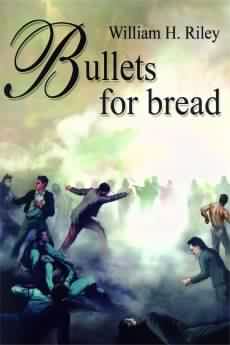
Bullets for bread.
Published by Exposure Publishing.
ISBN 1846854210
Buy it online from
Amazon, Abe books, Tesco, W.H. Smith, Barnes and Noble, or Waterstones.

Foreword.
Struggles endured by the working class throughout the nineteenth century were frequently struggles to survive the harsh living and working conditions that prevailed at that time. Disputes between ‘masters’, and those whom they employed at their various enterprises, were frequent and varied. Many employers treated their workers with contempt, and people worked under unreasonable rules and conditions that were rigorously enforced. Strikes and lockouts were commonplace events, which frequently ended in riots, violence and death.
‘Masters’ rights were enforced with the assistance of police, military, magistrates, and Governments, who passed laws designed to protect and maintain the ‘masters’ way of life. Starvation impelled many riots, people without an income during disputes, had few options, they could starve to death, or they could fight. Begging for Parish relief was out of the question for countless numbers of proud people.
All trades suffered at one time or another and all districts endured rioting or disturbances, some of which are list below.
Rochdale Riots. 1808.
Falmouth, Sailors Riots. 1810.
Luddite Riots. 1811 / 1812.
Sheffield Riots. 1812.
Littleport Riots. 1816.
Welsh Riots. 1816.
Derbyshire Riots. 1817.
Blanketeers Protests. 1817.
Worcestershire Riots. 1818.
Peterloo Massacre. 1819.
Welsh Miners strike. 1822.
Glasgow Riots. 1823.
Sunderland Seamen Riot. 1825.
Captain Swing Riots. 1830.
Miners Riots. 1831.
Welsh Riots. 1831.
Bristol Riots. 1831.
Toxteth Riots 1832.
Striking miners evicted from homes. 1832.
Peelers attack peaceful people in London. 1833.
Tolpuddle Martyrs. 1834.
Chartist Riots. 1838.
Newport Riots. 1838.
Rebecca Riots. 1838.
Striking miners evicted from homes. 1844.
Mining riots in Northumberland. 1844.
Norwich Riots. 1846.
Cumberland Riots. 1846.
Scottish Riots. 1846.
Bread Riots. 1847 /48.
Coal miners suffered as much as any other worker. Methane gas explosions claimed thousands of lives, including those of children. Miners also suffered from working under an atrocious bond system.
Strikes and lockouts were often accompanied by miners and their families being eviction from their homes. Their houses belonged to the coal mine owners. Some of the owners heartlessly evicted the sick and the elderly.
Thousands of rioters were imprisoned or executed, and many others were transported to the other side of the World for their actions.
In 1893 Ackton Hall Colliery, in Yorkshire, was the scene of a sustained period of rioting, during which the colliery was wrecked. The military were called in to restore order; they fired their weapons into a crowd of people. Two men died from the injuries they received; two innocent men who took no part in the riots.
The Ackton Hall Riots.
Did you hear about the bother at Ackton Hall Pit?
Colliers were locked out and were starving bit by bit,
Well, there'd been trouble all round the place,
But the mob causing it, were proving very hard to trace.
One day they came to Featherstone, the situation dire,
They caused a lot of damage, and lit a great big fire,
People came from miles around, just to see the sight,
Owners called the soldiers in, to give them all a fright.
They tried a bayonet charge, to chase them all away,
But the crowd that gathered there, decided to stay,
They'd never seen a fire as big as this before,
All they wanted was to watch, just a wee bit more.
The magistrate was called to read the Riot Act,
Next, the soldiers fired; a really awful fact,
The crowd were still around and they fired once again,
Anguished shouts were heard, as men fell down, in pain.
James and George Gibbs were among the men shot,
And Duggan, Edwards, Tomlinson, there was quite a lot,
Hobbs and Burns, Dowson, Oakley, and Williams too,
All because they wanted to stay and watch the view.
James Gibbs and James Arthur Duggan both later died,
Villagers were mourning; many unashamedly cried.
An Inquiry decided the men were innocent of any crime,
That was little consolation for their families at the time.
Awards were given, from the Treasury I heard,
But as for apologies, I never heard a word.
Families of Gibbs and Duggan were both given £100,
Not much for men killed, then buried in the ground.
© Bill Riley
Associated images.
Associated images. Poster.
|